Feeds:
Posts
Comments

Fabulous Duck Eggs

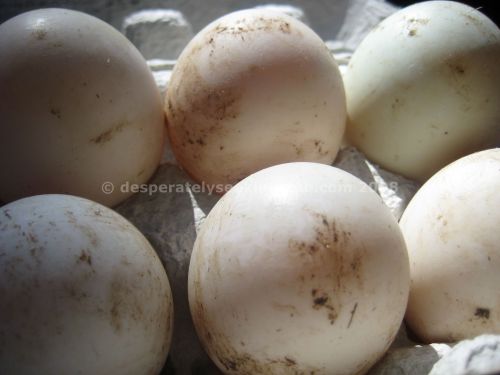
Walking around at my usual Sunday market, I passed by a stall that sells fresh duck.  I wasn’t in the mood to buy duck that day but I saw a little unassuming sign that said, “DUCK EGGS, $5”.  My heart skipped a beat but I didn’t grab the chance to buy it.  We walked back to the car and I was really regretting it so I ran back and ended up buying two dozen!!  They were gorgeous, different colours and natural i.e. with all the poop, feathers and straw on them!  As soon as I got home though, I realised that I couldn’t eat two dozen duck eggs so I sent it around to four of my friends.

I always heard that duck eggs make great custards and I now understand why.  Unlike chicken eggs, duck eggs have a higher yolk to white proportion.  The yolks are beautifully rich and creamy and good yolks are essential in making GREAT custard.  I scoured the internet to see if others blogged about duck eggs but was rather disappointed to find so few.  Any Chinese person would be familiar with duck eggs because they often use duck eggs for preservation, using them for 1,000 yr. old eggs and sometimes salted eggs.

The first night, we just pan friend them with a touch of oil and I ate it with rice and some fried shallots (like you get in Malaysia/Singapore on noodles) and a squirt of Sriracha – divine!  I have also hard boiled them but today, I decided to poach one alongside a regular free-range chicken egg.  I tell you, I ate the chicken egg first and I am glad that I did because when I bit into the duck egg, oh man, you just cannot compare the two!  The richness and deeply concentrated flavour of the duck egg was so much creamier and tastier.

How are they different?  For one, duck eggs are larger than chicken eggs.  Not only are the yolks larger, the egg white has a bizarre, almost rubbery texture that I find slightly strange.  If you pan fry it, the white sets really quickly but the yolks take a bit longer so it’s better to cook it at a lower heat than you would chicken eggs.  Be careful and don’t overindulge on duck eggs as one egg contains twice the amount of cholesterol than chicken eggs.  But definitely, if you come across them at any time, they are definitely worth it.

Don’t be scared of quail, duck, goose or even Ostrich eggs!  Next time I go to Barcelona, I am going to rent an apartment and cook one of those Ostrich eggs! 🙂

Different Duck Egg Colours - I LOVE the blue one!!

Comparing duck eggs to a chicken egg (far right). You can see the duck eggs are slightly larger and have a more transparent shell. I LOVE the blue eggs!

My Garden Friends II

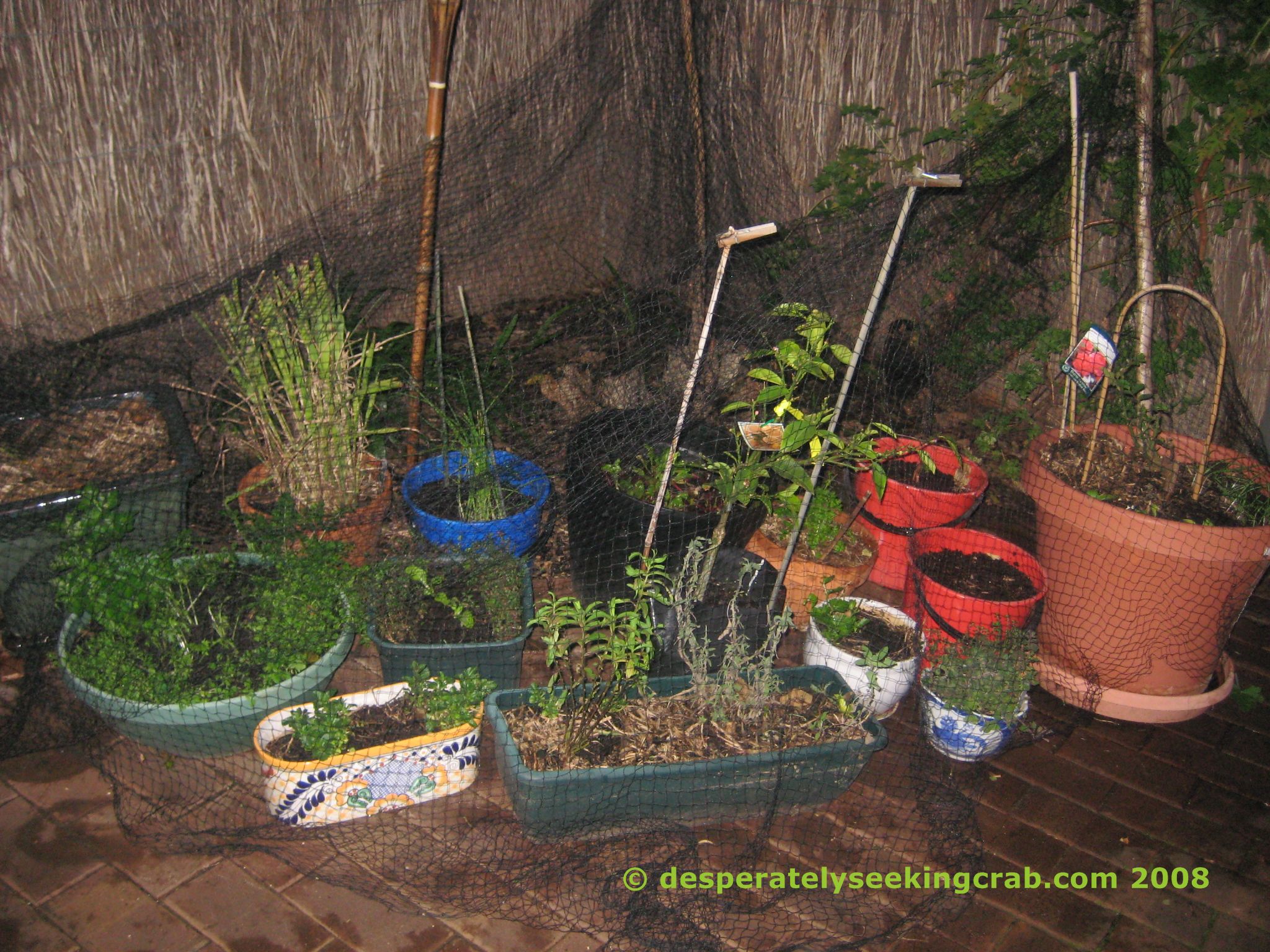
One day, I’ll take a picture of a Ring-tailed Possum.  There is a whole colony that lives around here and they let us know it by leaving lovely droppings all over the place – on our fence and near the plants.  I just sweep them up and throw them in my plants as fertilizer.  These are Aussie Possums – very cute and marsupials.  They are not the weird-looking Possums you get in North America.  I wonder why they are both called Possums?  I once saw one on my fence with a baby on her back…if only I had my camera!!  Cute as they are, they wreak havoc to any garden with succulent shoots – oh and yes, they loved my David Austin roses!!  Because I hate losing my plants, I have them in pots (they look sad because it’s winter) and they are fully covered by a bird net:

My pots covered in bird netting

My pots covered in bird netting

Anyway, here is another parrot – the Adelaide Rosella, that was in my garden over the weekend while I was trying to plant bok choy, sweet peas, green onions and peonies.  Adelaide Rosellas are a cross between Yellow Rosellas and Crimson Rosellas (bright red & gorgeous).  This guy was eating the red berries in the tree next to my fence.

Aren't they pretty?

Adelaide doesn’t have a huge Japanese population compared to the big three (Sydney, Melbourne and Brisbane) but we do have our share of half-decent sushi places (that are actually run by Japanese, which most aren’t).  Our Chinese and S.E. Asian population on the other hand is very healthy and growing each year.  I am happily able to get a really good won ton mein or Pho or Kuay Teow but we didn’t have a ramen restaurant at all – until now!!  I was sooo excited when I heard that a real ramen restaurant arrived in Adelaide!  In Japan, there are reportedly 16,000 ramen restaurants (in a country small enough to fit into the state of California!)

Outside Ajisen

Outside Ajisen

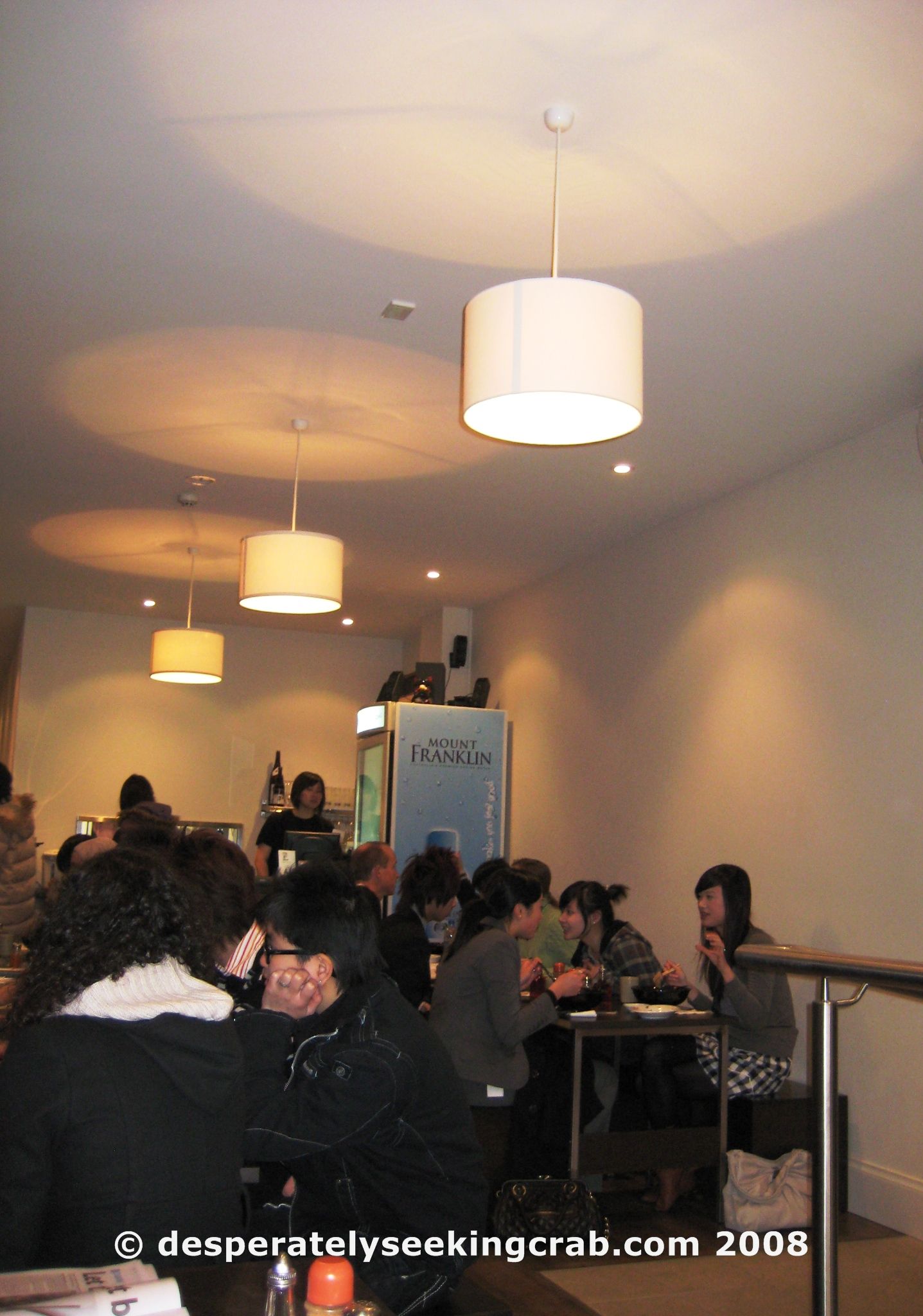
Inside

Inside the Restaurant

Cheery Little Napkin

Cheery Little Napkin

Fried Garlic to the left, Japanese Chili on the right

Fried Garlic to the left, Japanese Chili on the right

Chashu Ramen

Chashu Ramen

Spare Rib Ramen

Spare Rib Ramen

Ajisen ramen, a chain from Kumamoto, Japan has opened a small outlet on Leigh Street (the tiny lane off Hindley St).  They are open everyday except Sundays and are open for lunch and dinner.  Every time I pass by the place, it is packed!  I had to make a reservation one lunch with two girlfriends so that we could guarantee ourselves a table and that’s rather unheard of in noodle joints!  BusinessWeek Asia says that Ajisen (meaning a “thousand tastes”) is planning to open about 500 outlets in China alone!

Ajisen’s signature broth is the tonkotsu or pork broth with its slightly cloudy, white colour.  Tonkotsu is very different from miso, shio, or shoyu ramen that you can get in Japan.  It is my absolute favourite broth in a ramen and I was very excited!  Because I was judging for authenticity, I decided on a traditional Chashu Men, or in Chinese, Char Siu Mein. Japanese style pork tenderloin sliced thin, floating on fresh noodles in pork broth ($10AU).  Yum!  My friend Katie also ordered the same but Jacqui ordered the ramen with Spare Ribs in the same broth.  Both the pork tenderloin and the ribs were melt-in-your-mouth tender and the noodles were cooked just right, with a slight bite to them.  There were about 20 different ramens to choose from including stir-fried yakisoba.

No ramen eating experience is complete without gyoza.  Although our server forgot about it until after we had practically finished our ramen, the gyoza tasted homemade, was very generous in size with a lovely crisp skin and juicy pork filling.

Gyoza w/Dipping Sauce

Gyoza w/Dipping Sauce

Don’t forget to try some of the fried garlic topping sitting on every table to sprinkle on your ramen.  Beware, it’s very strong!  What I found interesting is that the bottle is written entirely in Japanese with NO translations anywhere but I suspect that people will eventually figure it out.

All in all, you get a lot of food for very little money and I would definitely recommend it (just don’t expect much from the service) – and not because it’s the sole ramen restaurant in Adelaide.  It is definitely a great fast meal before seeing a movie.  Service was rather forgetful and confused but I usually give up getting much service in this city so it wasn’t a huge shock to me.  Definitely a tasty, inexpensive and warming meal – especially in winter!

Thousands of people including myself have been following veteran American journalist Leroy Siever’s daily blog “My Cancer” on NPR (National Public Radio) in the U.S. and around the world.  His daily journals on his struggles and thoughts about his cancer formed a community – a community of so many people around the world who have been affected by cancer.  He brought solace and support to more people than he probably imagined it would.  Just reading comments left by readers is amazing how much of an impact he had by writing this blog.

Leroy passed away last night and I write this with a heavy heart.  Although he was told he was only going to live for 6 months, he lived for 2 1/2 years.  So many people got used to reading his daily emails and like me, probably wished for a miracle that his cancer would stop growing.

I contemplated for a few seconds on whether I should write about this on a FOOD BLOG.  But then, I thought about it and realized that this is MY blog and although food is my passion, fighting cancer is equally important to me also.  During this past year, THREE very close people to me have been fighting advanced stage cancers and it is a disease that does not discriminate and it is very sad.

This Friday, 22 August 2008 is Daffodil Day in Australia and 29 August in New Zealand.  Please buy a bunch of daffodils for $5 and/or donate to your local Cancer Council or Cancer Society.  There will be many volunteers (including myself) this week selling Daffodil Day items so look out for us please!

Links to some cancer organisations:

Canadian Cancer Society

American Cancer Society

Cancer Research UK

Japanese Foundation for Cancer Research

Cancer Society of New Zealand

Cancer Patients Aid Association (India)

and

Wiki Cancer – Stories, Support and Information

It is probably no surprise that I don’t love winter, given that  I grew up in a place famous for its sunsets and beaches.  Frankly, I am too lazy to dress for winter, prefering summer dresses and sandals to boots and sweaters.  I also love summer stone fruits (peaches, apricots, nectarines) and berries, and can’t eat enough of them when they’re in season.  The gloomy days and cold nights make me a bit lethargic and achy but the one thing that I DO love about winter is the amazing array of citrus that is ripe and on offer.  I honestly think that citrus fruits, packed with Vitamin C, are nature’s way of providing foods that will protect us from colds during the wet and nasty flu season.

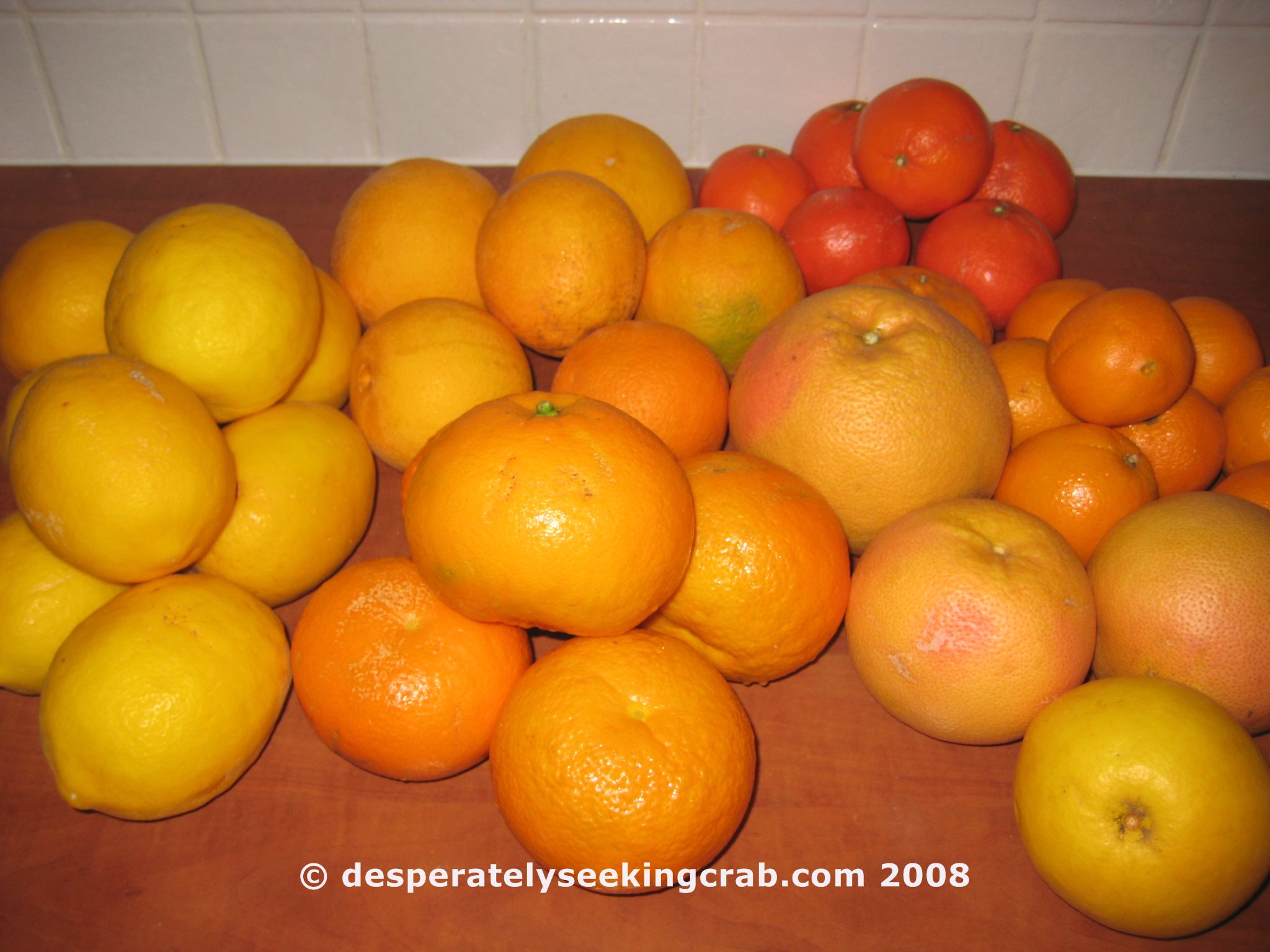
In my kitchen right now are no less than seven types of citrus fruits and because I thought they were so beautiful, I had to take a photo of them together!

Huge home-grown lemons, Huge home-grown oranges, Tangerines, Navel Oranges, Ruby Pink grapefruit, White grapefruit, Seville Oranges

From L to R Clockwise: Huge home-grown lemons, Huge home-grown oranges, Tangerines, Navel Oranges, Ruby Pink grapefruit, White grapefruit, Seville Oranges

My good friends gave me huge bags of home-grown oranges and lemons. I LOVE Meyer lemons – so sweet you can almost eat them like an orange. These are so huge that they look like they’re on steroids, and will make a beautiful lemon curd (when I get around to it).  The Seville oranges in the middle foreground were purchased at my local Adelaide Showground Farmer’s Market.  Seville oranges are not as common in the markets here as they are in Europe but many marmalade enthusiasts only use Seville oranges to get that traditional bitter marmalade flavour.  My husband likes bitter marmalade and I prefer it less bitter so we decided on a happy medium – use Seville oranges but remove excess white pith to prevent it from being extra bitter.

Winter is a great time for making jam because a) it’s miserable and wet outside, b) cooking heats up the house.  We spent last Sunday peeling, slicing and simmering marmalade all day.  2 kilos of fruit didn’t look like much, but it made a lot more jars of jam than we realised and as usual, I started giving them away to friends.  Among my neighbours, we all make jams and preserves so my pantry is filled with homemade jars of goodies.

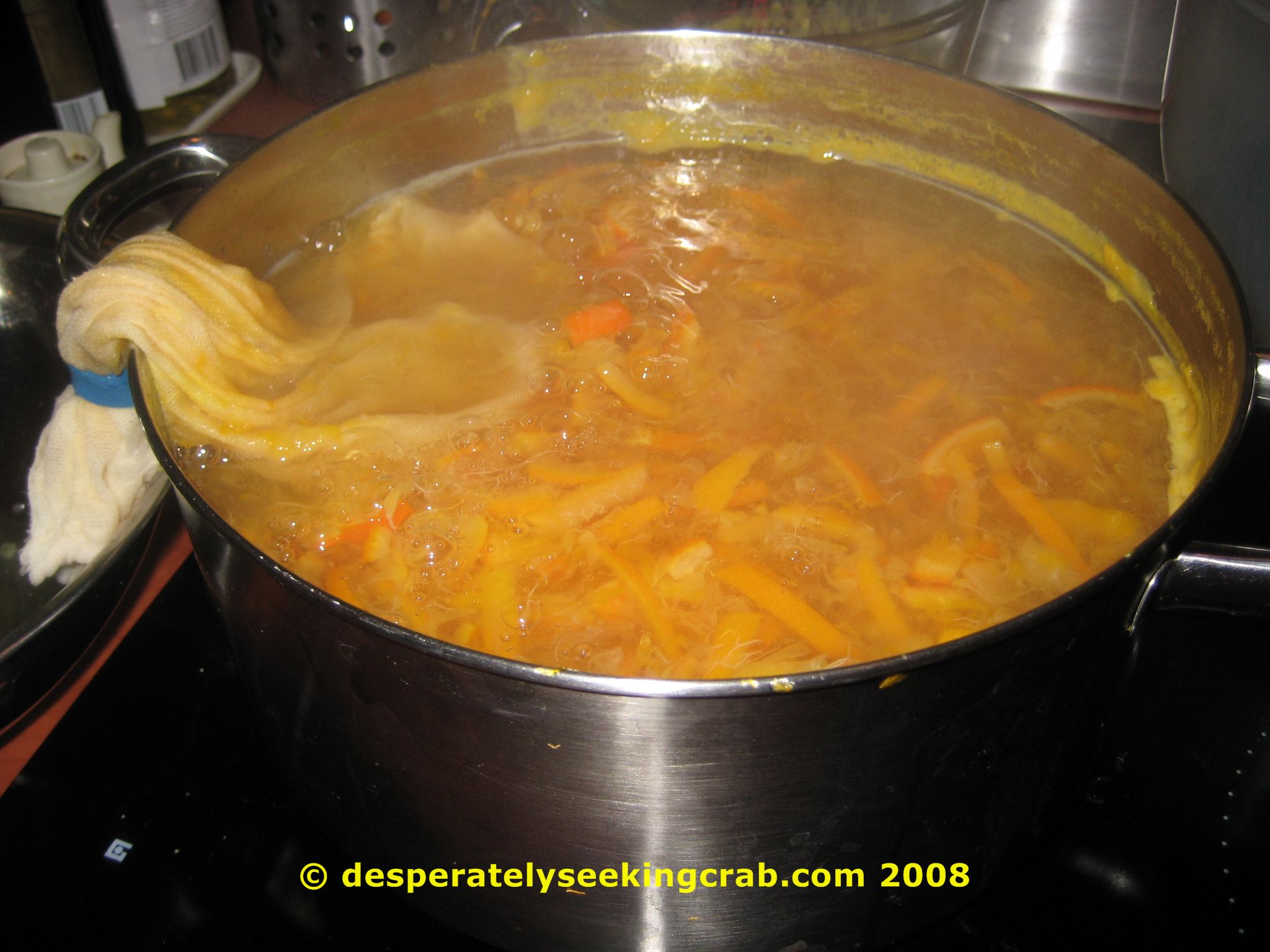
There are literally hundreds of recipes for making citrus marmalade (lemon, lime, orange, grapefruit, pomelo) and everyone will make it a different way which is why I will not post a recipe here, but this link is a good standard recipe.  My husband remembers his mother cooking the oranges whole before slicing them when making marmalade, while I like peeling and slicing the peel separately from the fruit. Instead of juicing the oranges, I like chopping the pulp up and cooking it down.  I don’t think any one way is the best way – as long as it turns out well in the end.  Do remember to keep the seeds (pips) and place them in a muslin (cheesecloth) bag and boil it together with the rest of the mixture to add pectin to help the jam set.

I do have something I’d like to share though – a knife designed for citrus that I bought it over a decade ago at Lakeland in the UK but I don’t see it in their catalog anymore.  What’s great is that the blade is both smooth and serrated and the other side can be used to score the skin to make it easier to peel.  I know that there are all kinds of gadgets that also score citrus fruit for ease of peeling but I still love this knife:

Love this knife!

Scoring the Orange

Scoring the Orange Peel

Removing a little of the bitterness

Removing excess pith to lessen the bitterness

Prepping the Oranges

Skimming the Scum Off

Skimming the Scum Off

The Marmalade is Almost Done

Just Before the Sugar was Added

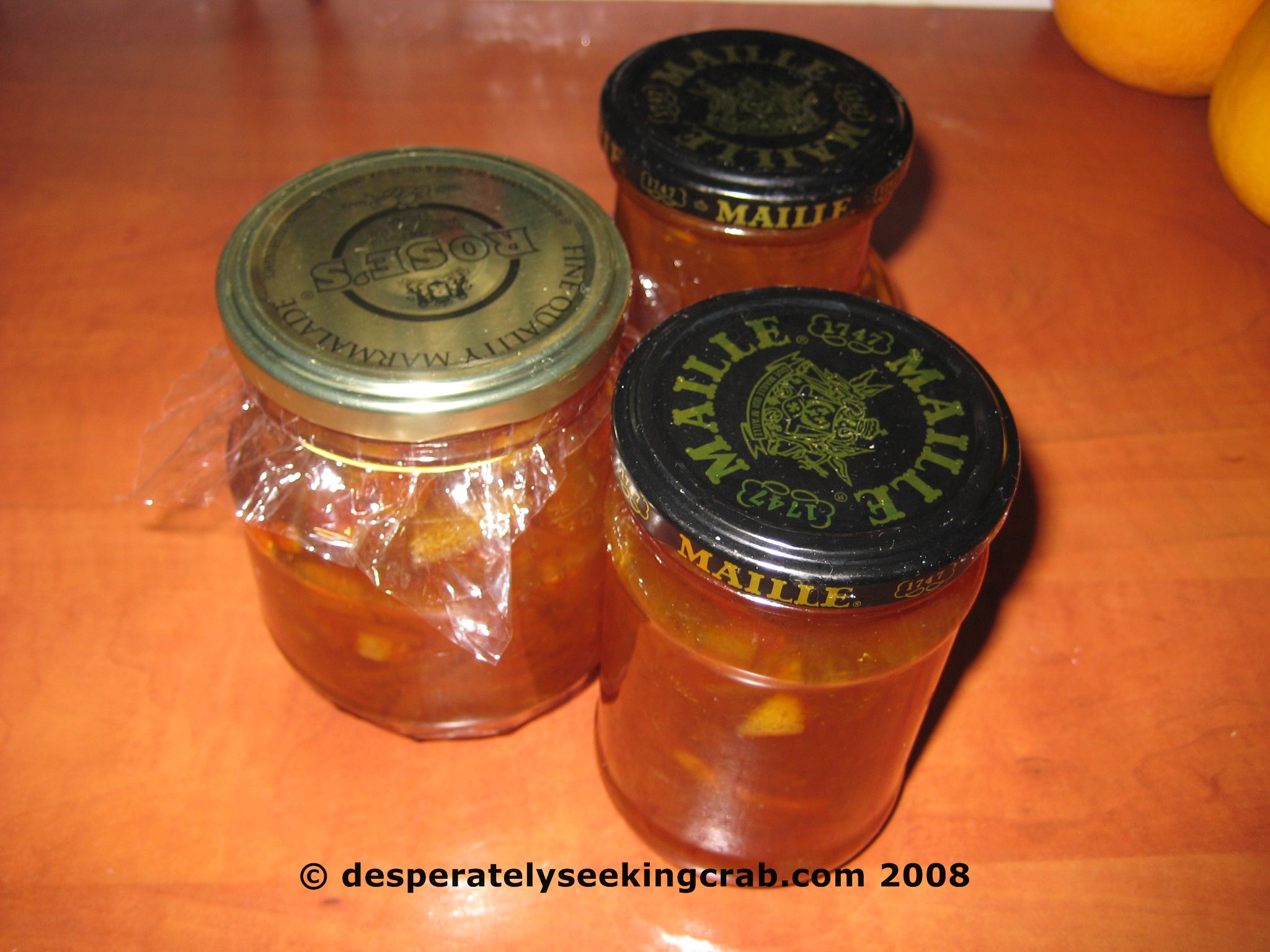
The Finished Product in Various Jars

The Finished Product in Various Jars

Design a site like this with WordPress.com
Get started