Feeds:
Posts
Comments

Twitter and Food…

I haven’t even upgraded my iPod to an iTouch (I have an old iPod Mini) nor have I purchased a new laptop in many years. I have only just upgraded my mobile phone that includes a good camera, MP3 and internet capability but I can barely keep up with technology.

Twitter is, of course, the new micro-blogging site where you can tell the world every minute detail of your thoughts and doings at any given time.  I signed up for an account the other day but I’m still wondering how to incorporate it into my life.  So far, the only way that Twitter seems useful to me is if you use it on the go with your mobile phone but it’s definitely not made for stay-at-home mothers. Twitter’s usefulness in the food industry is a different story especially when restaurants update their menus and their whereabouts to all their following fans.  This is especially useful if a restaurant’s location changes nightly such as a taco truck in Los Angeles.

NPR (National Public Radio) in the U.S. did an article on Kogi, the Korean-Mexican mobile restaurant (aka Taco Truck) in L.A. In the article Tweeting Food Truck Draws L.A.’s Hungry Crowds, writer Ben Bergman talks about how Kogi’s success is owed largely from their fans following Twitter to track where Kogi will be parked on a particular night and what specials there are each evening.  Apparently, there are over 8,000 people following Kogi on Twitter and since joining Twitter over a week ago, I also became a Kogi follower even though I live nowhere NEAR L.A. and am not planning a trip there anytime soon.  I am following Kogi just in case I get to go to L.A. within the year and use my cool phone to track them down one evening.  I have to say that the combination of Mexican and Korean – two of my most favourite foods (apart from Japanese) makes me want to hop on the next plane to try their tacos.

Looks like old-fashioned food reviews in newspapers are not going to be the only influence on a food business anymore – seems like technology has caught up with networking sights such as Facebook and Twitter and to keep up with the trends and to attract future crowds, we have to keep our minds open and sharpened to the latest marketing tool.  But I have to admit, even though I’m not exactly old,  it is truly exhausting keeping up.

We went to a once a month market that sold clothes and other knick-knacks this past weekend and at the back were the food sellers (majority selling baked goods) and this young man had a stall piled with very attractive-looking, rustic and authentic items such as croissants, pannetone and banana bread.  But much to our surprise, a whole loaf of banana bread was going for $25!  Mind you, it was a very sexy and large banana bread but I thought…”wow!”  At home, I whip up banana bread so fast that I couldn’t imagine any banana bread being worth that much money.  Now I wish that I had bought a slice of it to see how good it was…next month perhaps.

I always keep bananas in my freezer ready to defrost and make into banana bread.  It started out one year with a market stallholder selling me 10 kilos (22 pounds) of bananas for $2AUD at the end of the day!!  We put two in a snack Ziploc bag and froze them – over a year later, we’re still eating them!

My standby foolproof banana bread recipe is an adaptation from the American Sunset magazines classic cookbook first published in 1963 called “Breads”.  It takes me less than an hour and a half from the prep to the baking and it tastes divine toasted under the grill with lashings of butter.  My recent find has been ground nut meals at the Wayville Sunday market and have been topping my banana bread with ground walnut meal as well as in the batter. The extra oils and texture add an extra dimension and crunch.

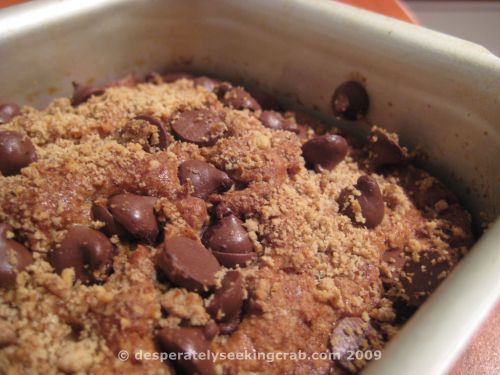
This was the first time I put chocolate chips on...

This was the first time I put chocolate chips on...

Foolproof Banana Bread

2 cups flour OR 1 2/3 cup flour and 1/3 cup walnut meal

1 tsp. baking powder

1/2 tsp each baking soda & salt

1 cup sugar

1/2 cup chopped walnuts (optional)

3/4 cup mashed ripe bananas (about 2 bananas)

1/2 cup milk

1 egg

1/4 cup butter, melted

Chocolate chips are optional

In a bowl, stir together flour, nut meal (if using) baking powder, baking soda, salt, sugar and nuts until thoroughly blended.  In a separate bowl, combine bananas, milk, egg and butter; stir into dry ingredients just until well blended.  Pour batter into a greased 4 1/2 x 8 1/2 inch (10 x 20 cm) loaf pan.  Sprinkle top of loaf generously with walnut meal and/or chocolate chips if desired.

Bake in a preheated 350°F (175°C) oven for 1 1/4 hrs or until bread begins to pull away from sides of pan and a knife inserted in center comes out clean.  Let cool in pan for 10 minutes then turn out onto a wire rack to cool completely.  Makes one large loaf.


Before I left for Bangkok, I was like a mad woman checking out as many blogs and travel advice websites I could for the best places to eat.  As you can imagine, it started to be a huge task and with only three days there, I had to really pick and choose what experiences were on the top of the foodie list.  While searching through blogs, I stumbled upon this short post for the Sukhothai Hotel’s chocolate buffet offered on the weekend and I decided that I had to try it.  My only regret is that we decided to have the buffet on the same day that we were going to have the big show and buffet that night at the Mandarin Oriental (more on that later) so it was hard to totally gorge at both places!

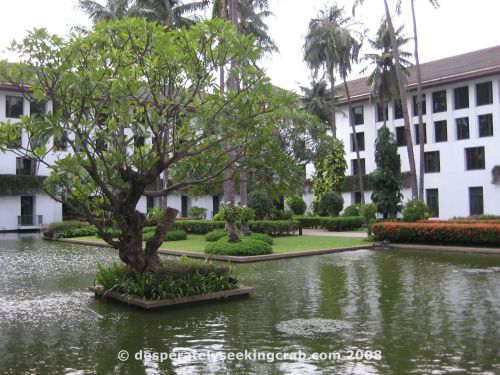
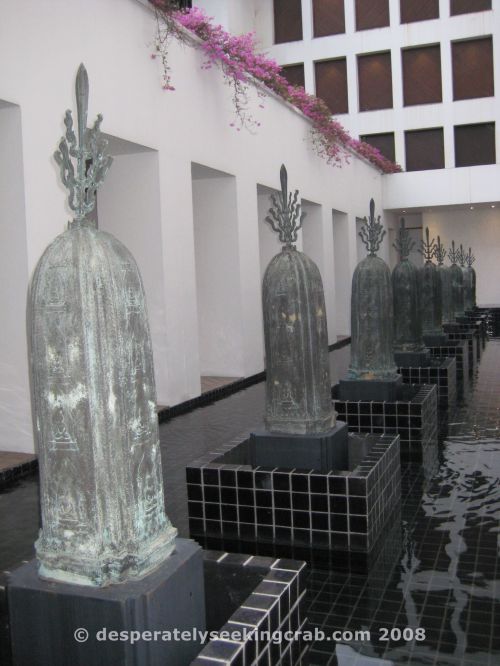
We caught a cab to the Sukhothai Hotel and it was so nice to see a beautiful, low-rise hotel in the middle of all those buildings.  The style of the hotel is similar in so many ways to the Halekulani Hotel in Waikiki (5 star/5 diamond) in its minimalist elegance, Asian influence and tropical surrounds.  As soon as you walk into the tea salon, you sort of feel like you walked into an elegant library where people are speaking in hushed tones and relaxing in big, comfy upholstered chairs.

Sukhothai

img_3611edit

img_3613edit1

Immediately, you are greeted, your tea order is taken (or coffee if you like) and then a curiously cold, golden drink is served in a glass.  This is the lemongrass drink that I read in that blog!  I was so excited because it was described as refreshing but I was so sorely disappointed because for me, I found it much too sweet.  Oh well, to each is own.  The one thing that our servers did not explain to us was that there were two sections of the buffet.  We were sat in the chocolate buffet but across the hall, there was another savoury buffet displayed as well.  For people not used to buffets, they probably wouldn’t have ventured out across the hall to see what was on the other side.

Lemongrass Drink

Lemongrass Drink

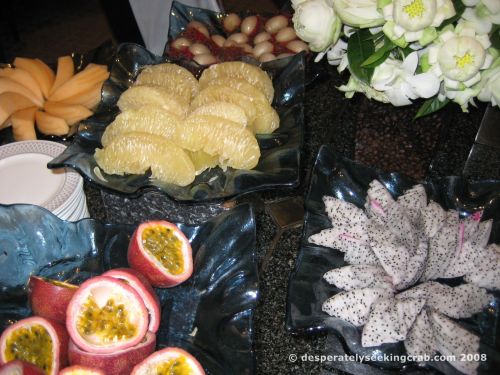
Because we didn’t have lunch, we started with the savouries first.  I went straight for the sushi and little dim sums while my husband went for the mini sandwich rolls and cheese.  The fresh tropical fruit served at this buffet were fabulous.  The quality of everything is very high and everything looked impeccable.

After the savouries came the serious stuff – CHOCOLATE!!  I was so overwhelmed with the choices that I didn’t know what to start with first.  There were chocolate crème brulées, white or dark chocolate mousses, tri-colour cakes, white chocolate mousse cake with passionfruit topping, dark chocolate truffles and much more.  I tried nearly everything there and I was really impressed with it all.  My favourites were the lighter textured desserts like the mousses but the truffles were divine as well.  There were also a few homemade ice creams:  on that day, the flavours were white chocolate/coconut, wasabi chocolate and I think strawberry (sorry, memory is vague).

img_3607edit

The savoury buffet

Tropical fruit with the savoury buffet

Tropical fruit with the savoury buffet

Chocolate buffet

Chocolate buffet

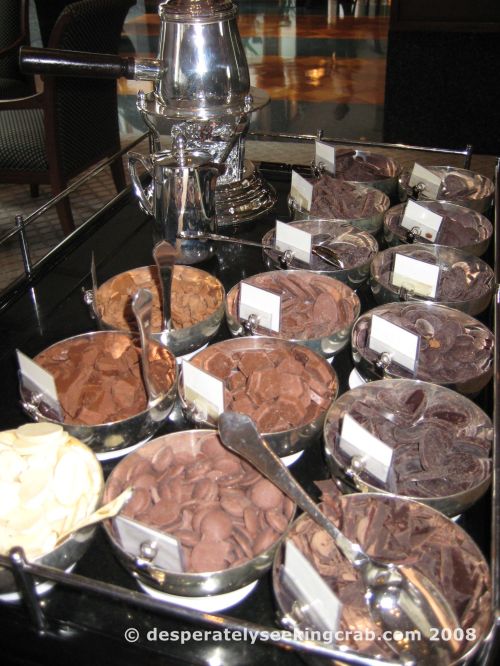
We both left the pièce-de-resistance to the end – the chocolate cart to make your own custom chocolate drink!  On that day, there were 14 separate bowls of different types of chocolate.  Each bowl had a label describing either the flavour or sometimes the origin of the chocolate and the percentage of cocoa.  Displayed were everything from white chocolate, milk, orange flavoured, Gianduja (hazelnut, think Nutella), African, Central American, you name it!  An attendant would put as much chocolate as you wanted into a pot simmering over a heat source and stir it together and serve it to you in a demi cup.  The result?  An absolutely sublime and dense chocolate drink that you custom made!

Hot chocolate trolley

Hot chocolate trolley

Attendant mixing the hot chocolate

Attendant mixing the hot chocolate

Before we finished, I saw the chef walk out to check on the display.  He started speaking to one of the guests who seemed like his friend and I knew it, he was French – I recognized that the desserts displayed were definitely made by someone who was trained in the French technique.  After gorging ourselves for two hours, we stumbled back to our hotel room realizing that we had another big meal in a few hours – oh the dilemmas of holidays.  🙂

Sukhothai Hotel offers the Chocolate Buffet on Friday, Saturday and Sundays from 2 to 6pm.  The price for two people was approximately 1860 Baht.  It is best to book the buffet if there is a lot going on that weekend as the tea salon is not that big.

img_5255

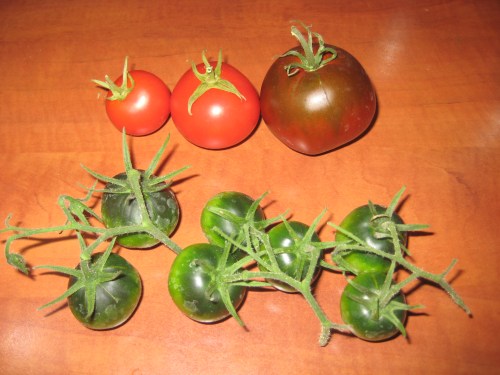
I had the most beautiful tomato plants this year and I even started them a bit early so that they would have some chance to stay healthy.  Last year, because I started them so late, they were burnt from our record hot and long summer.  Well, this year, just when I think I’m going to have a great crop then there is a massive infestation of green caterpillars everywhere!!  Now, we are in the midst of a long heat wave (so early on too) and I might as well kiss my tomatoes goodbye and start over again..  Gardening can be so rewarding yet so frustrating!

HAPPY NEW YEAR!!

byo bags

The South Australian government has done something pretty radical – it is the first state in Australia that has decided to phase out and ban lightweight plastic shopping bags to help the environment by 04 May 2009.

The one thing that I noticed when I first moved here was that reusable bags were already very commonplace at supermarkets and farmer’s markets.  What made me even more happy and surprised was that people were actually using it for environmental reasons and not just because they got $0.05 credit per bag re-used at a supermarket like they do in many U.S. supermarkets.  My childhood home of Hawaii has a long way to go before people start to get less wasteful – I’ve only recently seen reusable bags for sale at drug stores and supermarkets.

We always keep at least 6 to 8 bags in our car at all times just in case we do that “spontaneous grocery shopping”.  But I have to admit, even someone like myself who is very environmentally conscious, has forgotten my reusable bags quite a few times (especially if I shop on my lunch break at work).  Luckily I have a great reusable bag that folds up into the size of a wallet that can fit in any purse. Having worked at a produce store in my late teens, I know full well how many bags an average supermarket goes through in one day (it is astonishing) and it is so wasteful because the majority end up in landfills.  The only thing that I will admit to being sad about is not having free wastebasket liners…I like using those plastic bags for my office and bathroom bins but I’m sure I’ll get over it.

You can watch the television ads running here about this on Youtube:

Of course, we are not the first city to have a ban on plastic bags.  My former city of residence San Francisco, was the first city in the USA (yay, go SF!) to ban bags in March 2008.  http://www.sfenvironment.org/our_programs/interests.html?ssi=7&ti=6&ii=142

Although China has not banned plastic bags, they have stopped giving away free plastic bags which is great news for a country that wasted billions of bags a year.  http://news.bbc.co.uk/2/hi/in_pictures/7443530.stm

Here are a few more places that have had a ban:

Plastic bag bans around the world

South Australia joins an increasing number of countries that already restrict plastic shopping bags or plan to do so:

AFRICA: Rwanda and Eritrea banned the bags outright, as has Somaliland, an autonomous region of Somalia. South Africa, Uganda and Kenya have minimum thickness rules, and Ethiopia, Ghana, Lesotho and Tanzania are considering similar measures.

BANGLADESH: The first large country to ban bags in 2002. Bangladesh blamed millions of discarded bags for blocking drains and contributing to floods that submerged much of the country in 1988.

BHUTAN: The isolated Himalayan country banned plastic shopping bags, street advertising and tobacco in 2007, as part of its policy to foster “Gross National Happiness”.

CHINA: The ban on ultra-thin bags that goes into force on June 1 will cut pollution and save valuable oil resources, the State Council, or cabinet, says. In May 2007 Hong Kong proposed a 50 cent “polluter pays” levy on plastic shopping bags.

ENGLAND: In May 2007 the village of Modbury in south Devon became Europe’s first plastic bag-free town, selling reuseable and biodegradable bags instead. London’s 33 councils plan to ban ultra-thin bags from 2009 and tax others.

FRANCE: In 2005, French lawmakers voted to ban non-biodegradable plastic bags by 2010. The French island of Corsica became the first to ban plastic bags in large stores in 1999.

INDIA: The western state of Maharashtra banned the manufacture, sale and use of plastic bags in August 2005, after claims that they choked drains during monsoon rains. Other states banned ultra-thin bags to cut pollution and deaths of cattle, sacred to Hindus, which eat them.

IRELAND: A plastic bag tax was passed in 2002. The tax created an initial 90 percent drop in bag use, according to the Environment Ministry, though usage gradually rebounded.

ITALY: Outright ban to be introduced from 2010.

TAIWAN: A partial ban in 2003 phased out free bags in department stores and supermarkets and disposable plastic plates, cups and cutlery from fast food outlets. Most stores charge people who don’t bring their own T$1 ($0.03).

UNITED STATES: San Francisco became the first and only US city to outlaw plastic grocery bags in April 2008. The ban is limited to large supermarkets.

Source: Planet Ark, May 28, 2008

Hopefully more cities will follow suit.  Don’t forget your bags next time you go shopping!
Design a site like this with WordPress.com
Get started