Feeds:
Posts
Comments

Every spring when I was a teenager, I remember watching Good Morning America and without fail, there was a cooking segment that introduced the asparagus season and whenever I saw the episode featuring asparagus, I knew that spring had officially arrived (since we didn’t have seasons in the tropics). I think that that morning show was where I learned how to choose the perfect spears and how to snap the woody bottom off so that only the tasty tender bit remained. Over the years I have eaten all colours – green, purple and white asparagus. As a child, my only experience with white asparagus (as with many of you) was in a can – gross and mushy, but I remember my mother revering it because it was so expensive and gourmet. Of course when I finally ate fresh white asparagus, it tasted nothing like the stuff in the can! In Barcelona’s La Bocaria market, white asparagus were piled high and so incredibly cheap that I couldn’t believe my eyes! Next time I visit Barcelona, I have vowed to stay in a serviced apartment to be able to cook those lovely beauties.

It seems like purple asparagus is even rarer to find and as it has a higher sugar content than its green relatives, it has a sweeter flavour. If you cook it quickly, it will retain most of its purple hue but if cooked for an extended period of time (like I once did), it turns green again (much like purple peppers/capsicums). When I worked as an apprentice at Chez Panisse, I remember purple asparagus on the menu a few times and I also remember that we peeled about 1/3 of the bottom of each spear to expose the tender bits and avoid the woody thicker skin at the bottom – it is one of the many images that I associate with that restaurant.

Asparagus is beautiful boiled/steamed and served with a little bit of sea salt, stir-fried with beef Asian style, accompanied with Hollandaise sauce or even used to make a chilled cream of asparagus soup topped with fresh crab. Mmmm…

Recently I have noticed beautiful bunches of green asparagus at my local greengrocers and although I wasn’t sure whether they were domestically grown or not (since it is autumn here), I couldn’t resist them and decided to use them to make easy and very tasty canapés. (I read some statistics recently that I found interesting – most of the asparagus grown in Australia is grown in Victoria and that 67% of Australia’s production is imported to Japan as opposed to 5% from California’s production.)

Digging into my Japanese repertoire, I decided to make teriyaki-marinated beef asparagus rolls. If you live in a city where you are able to get beautifully thin sukiyaki beef, by all means, use it because it’s precut and ready to roll. If however you live in a city like I do, where butchers stare at you in confusion if you ask for shabu-shabu or sukiyaki cuts of beef, then you may have to do what I did. I went to a local butcher and tried to explain what I wanted to do and then he offered me a piece of round that he butterflied and then offered to tenderise it. When I have told butchers here that I want the meat to be very THIN, NONE of them so far have understood that I want it to be PAPER thin, not 4 mm thin. Anyway, I got it home and decided to bash the meat (without pissing off my neighbours) to my desired thinness in preparation for marinating.

Preparing Beef

Bashing the beef into submission…a great stress reliever.
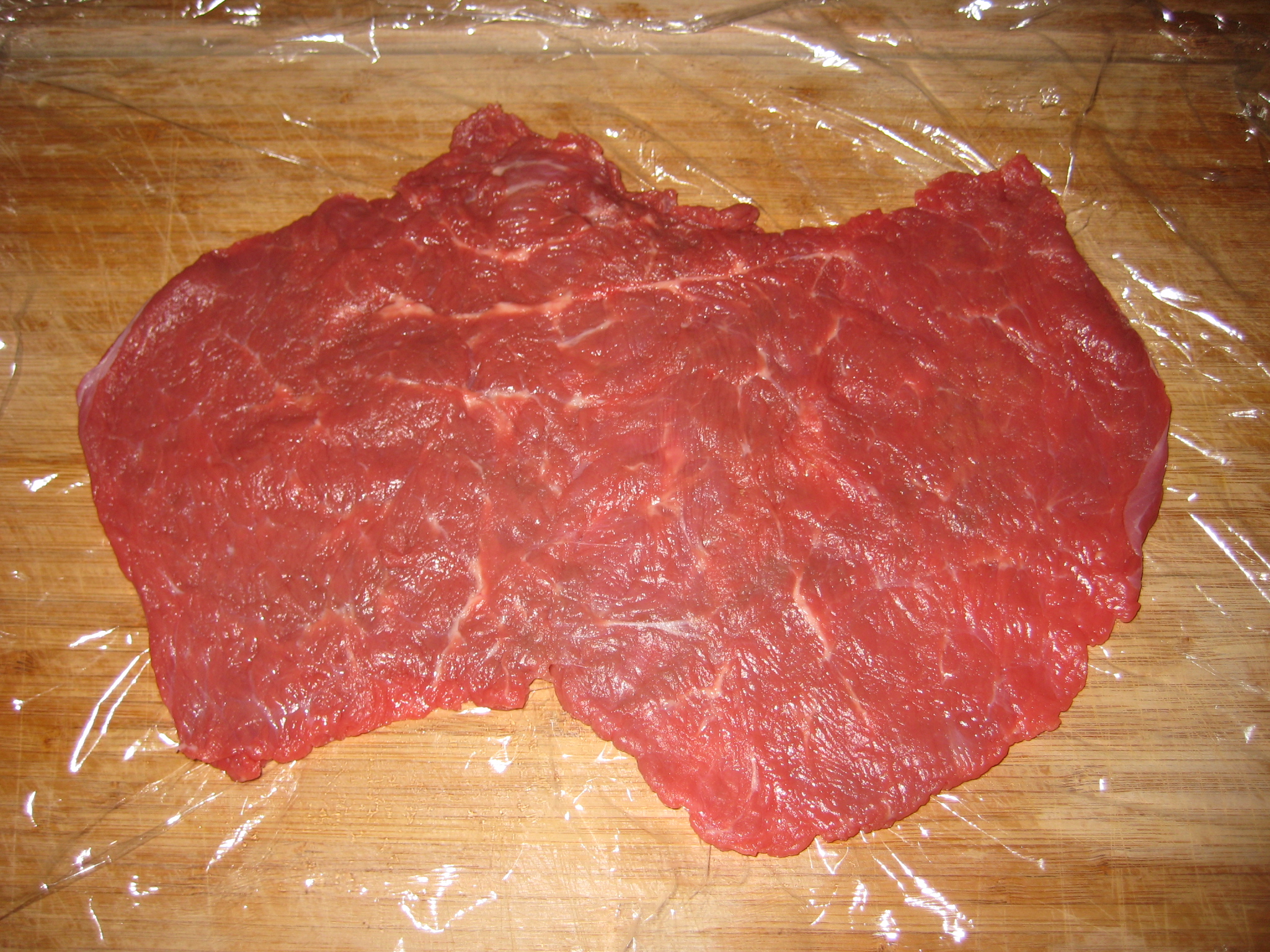
Looks like Oz

Odd, I didn’t try to create a map of Australia!
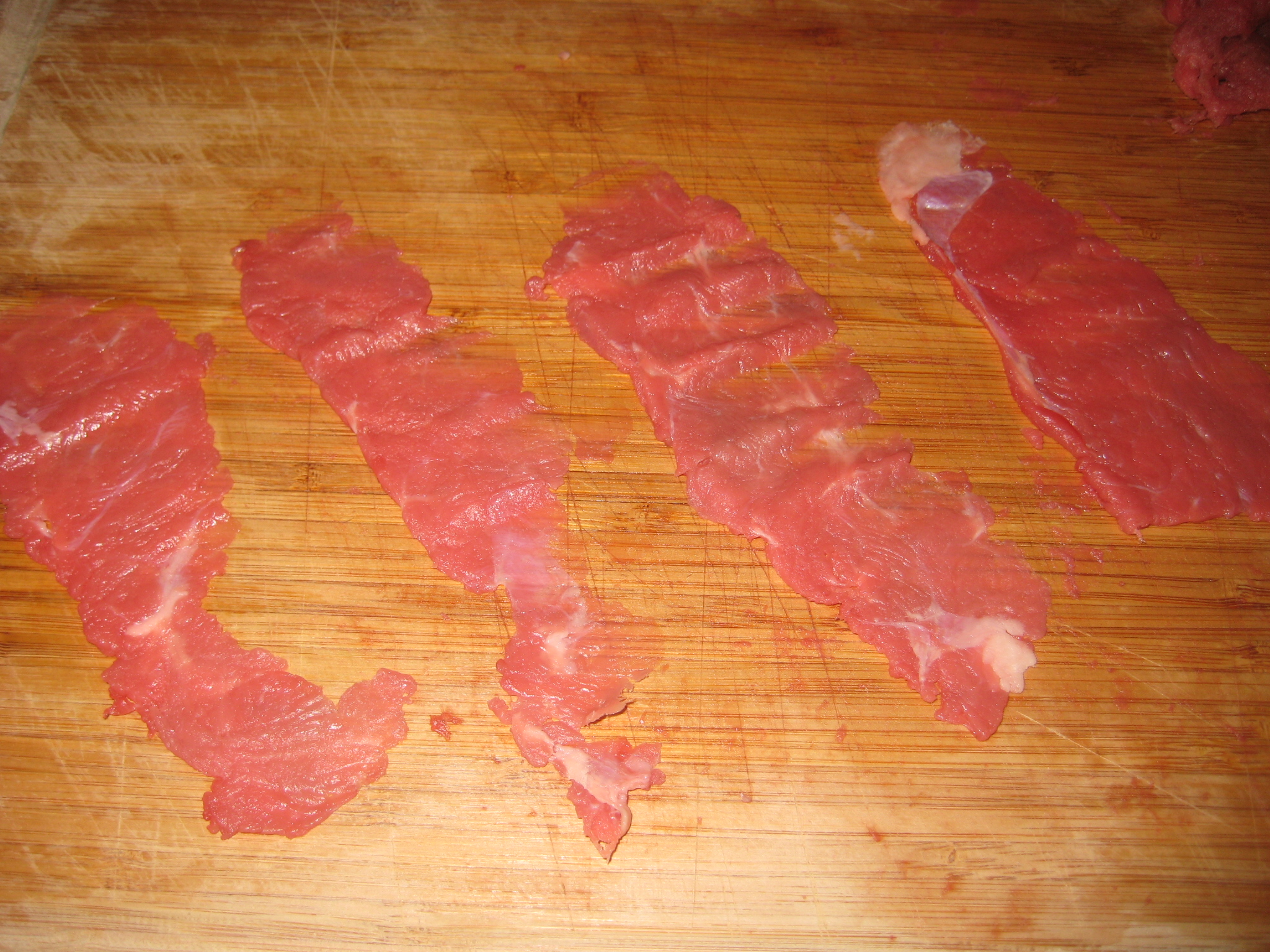
Beef strips ready for the marinade.
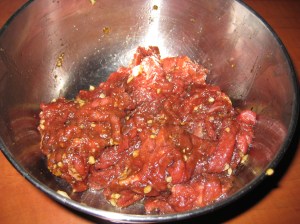
Beef strips in teriyaki marinade.

Teriyaki Marinade

1/3 c. Japanese soy sauce (Kikkoman, Yamasa)

2 Tbsp. sugar

2 Tbsp. mirin

2 Tbsp. sake

1 large clove of garlic

1 Tbsp. mince or grated fresh ginger

1 tsp. sesame oil (optional)

2 Tbsp. chopped green onion (optional)

Instructions:  Slice thin meat into 1 to 1.5 in. (2.5 to 3.5 cm) wide x 4 in. (10 cm) thin slices (long enough to wrap around the stacked asparagus).

Mix all the marinade ingredients together making sure that the sugar is dissolved before placing beef in the marinade. You may double or triple this recipe to suit a larger amount of meat. The piece of meat I used was only about 250g (about 1/2 lb). Leave in marinade for at least an hour before cooking.

To make canapés: Blanche asparagus spears whole in boiling water until nearly cooked. Place immediately under cold water to stop cooking. Cut uniformly into 2.5 in / 5 cm pieces and place three pieces of asparagus in each stack. Place marinated beef pieces on a flat surface and roll around the asparagus clusters. Pan fry the stacks with the join on the bottom to be seared initially, so that the cooked beef doesn’t start to unravel when turned over to cook the other side. Serve hot or at room temperature.

These canapés look harder than they are, are very tasty, make great conversation pieces and you may even eat them as a meal with hot rice!
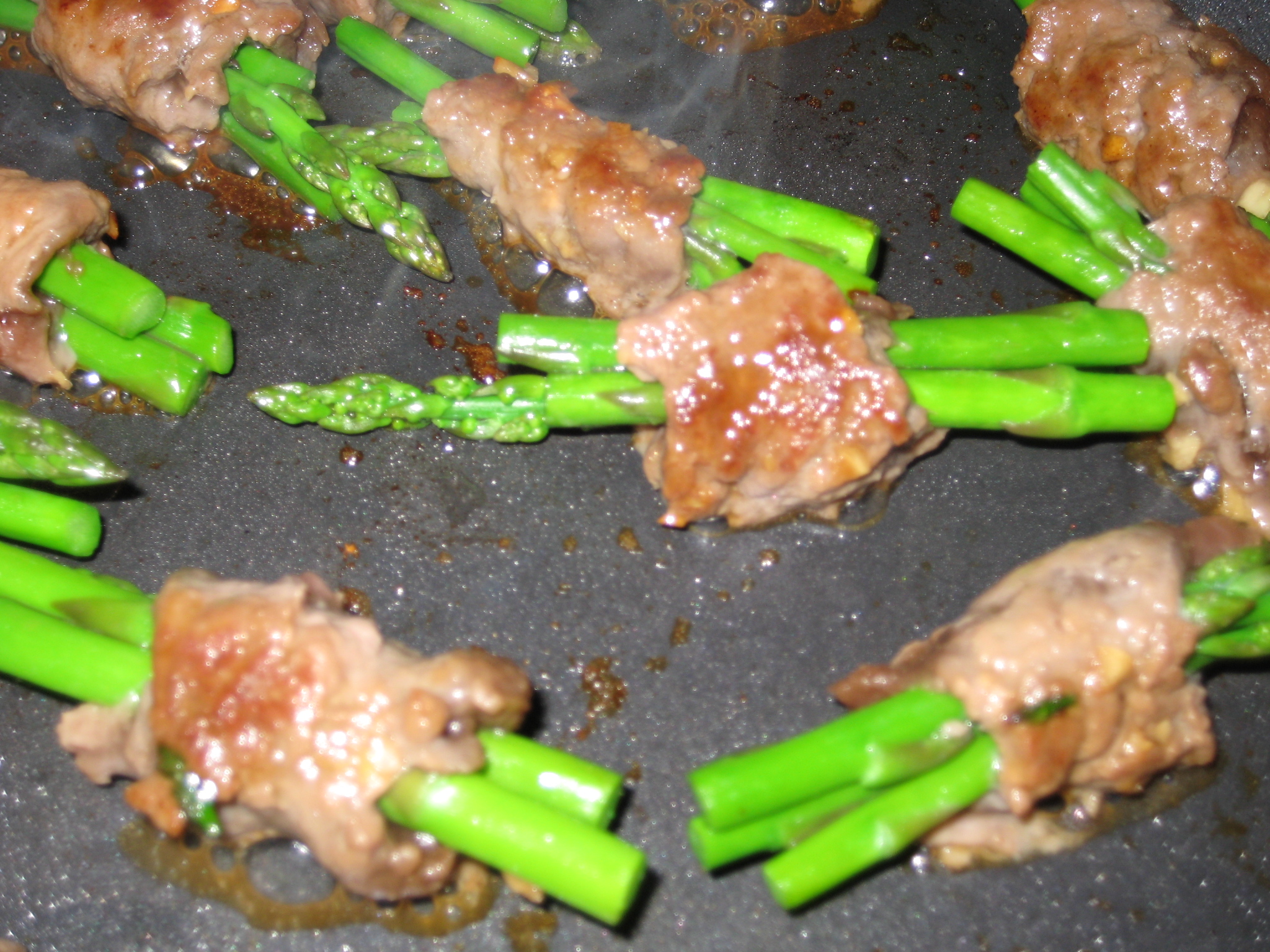
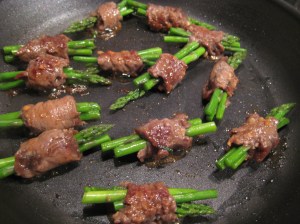
This recipe is also featured at:

Asparagus Canapes

See Asparagus Canapes on Key Ingredient.

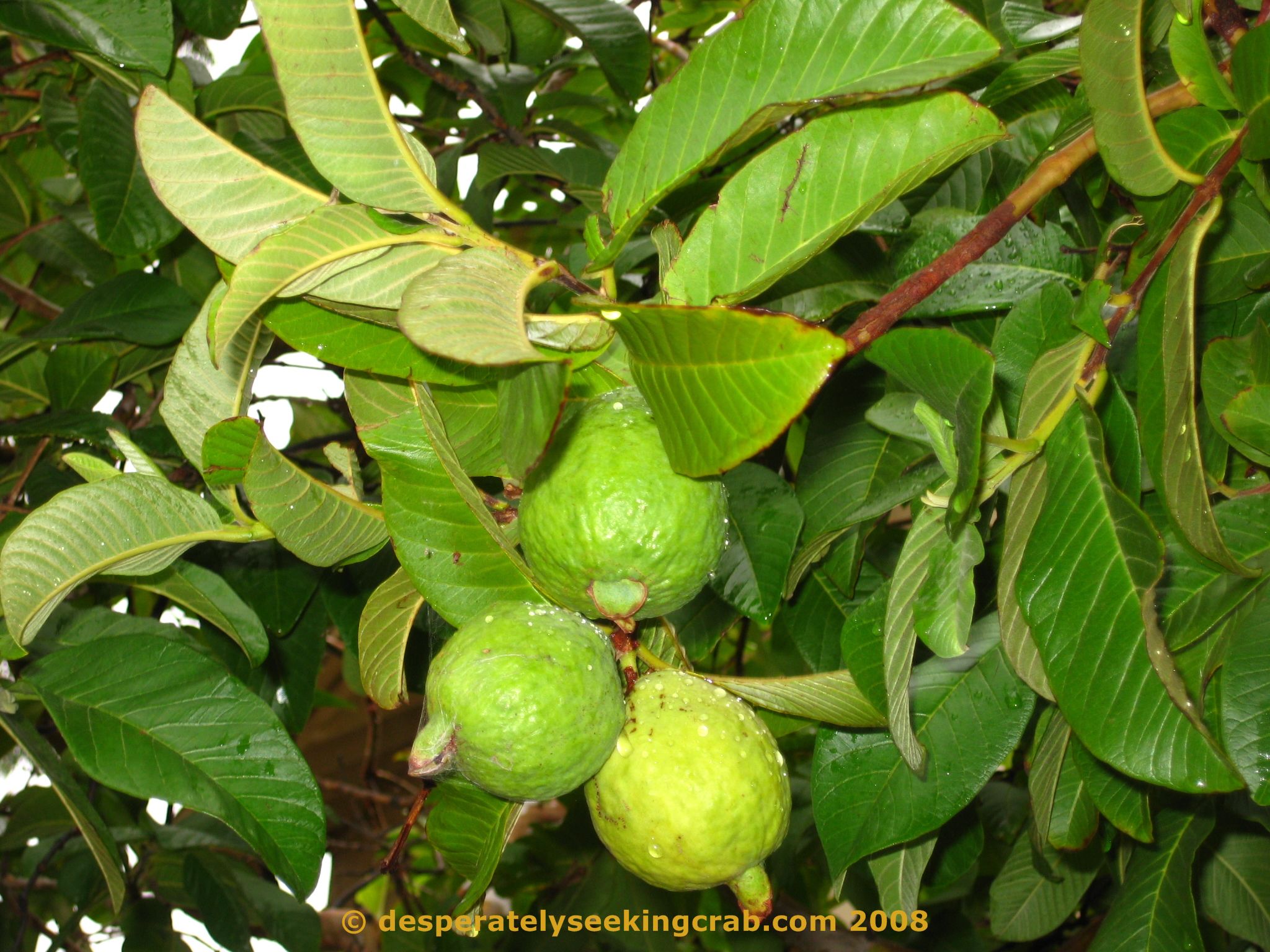
Remember how I mentioned the perfumed fragrance of Quince? Well, guavas are even more intense – more heady and intoxicating…just like the tropics.

About a month after we moved into this house, I had noticed a tree at one end of the car park that had an abundance of yellow round fruit on the tree as well as fallen and squished ones on the ground under it. It seemed as if every car that drove by this tree squished one on its way past. Upon closer examination, I must have gasped quietly when I realized that it was a guava tree and not just any old guava tree, it was the variety that I grew up with as a child in Hawaii – yellow on the outside and pink flesh on the inside. What other types of guavas are out there? One website, www.tropicalfruitworld.com.au on the Gold Coast in Australia has a great explanation on the different types of guavas (they list a total of 11) and I didn’t even know that there was one actually called “Hawaiian” which happens to be a green skinned, pink fleshed variety. Last year, the tree produced so much that I had enough to give away to people, to puree them and enough to make two batches of guava jelly. I don’t know what’s wrong this year but either the drought caused less fruit or perhaps it rained during flowering but there are very few on the tree and I am actually quite saddened by this. Ah well, this is nature and every year can’t be the same – I will just have to cherish the few that I do get this year. One of my favorite ways of eating guavas? Waiting until ripe and very fragrant, slicing in half and devouring it with just a tiny sprinkle of sugar.

A memorable childhood memory involving fresh guavas was going to my friend Sharyl’s house and making guava milkshakes:

Peel and puree guavas and pass through a mesh sieve to remove seeds. Add desired sugar to the guava puree and set aside. Then proceed to make a vanilla milkshake with a few scoops of good-quality vanilla ice cream, a splash of milk and add 2 to 4 Tbsp. of guava puree to taste. Enjoy!

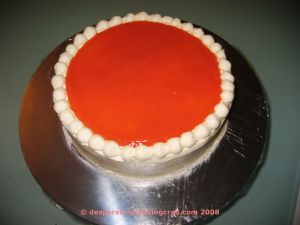
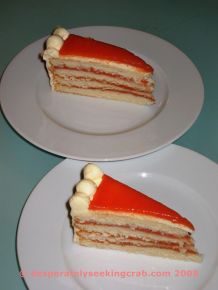
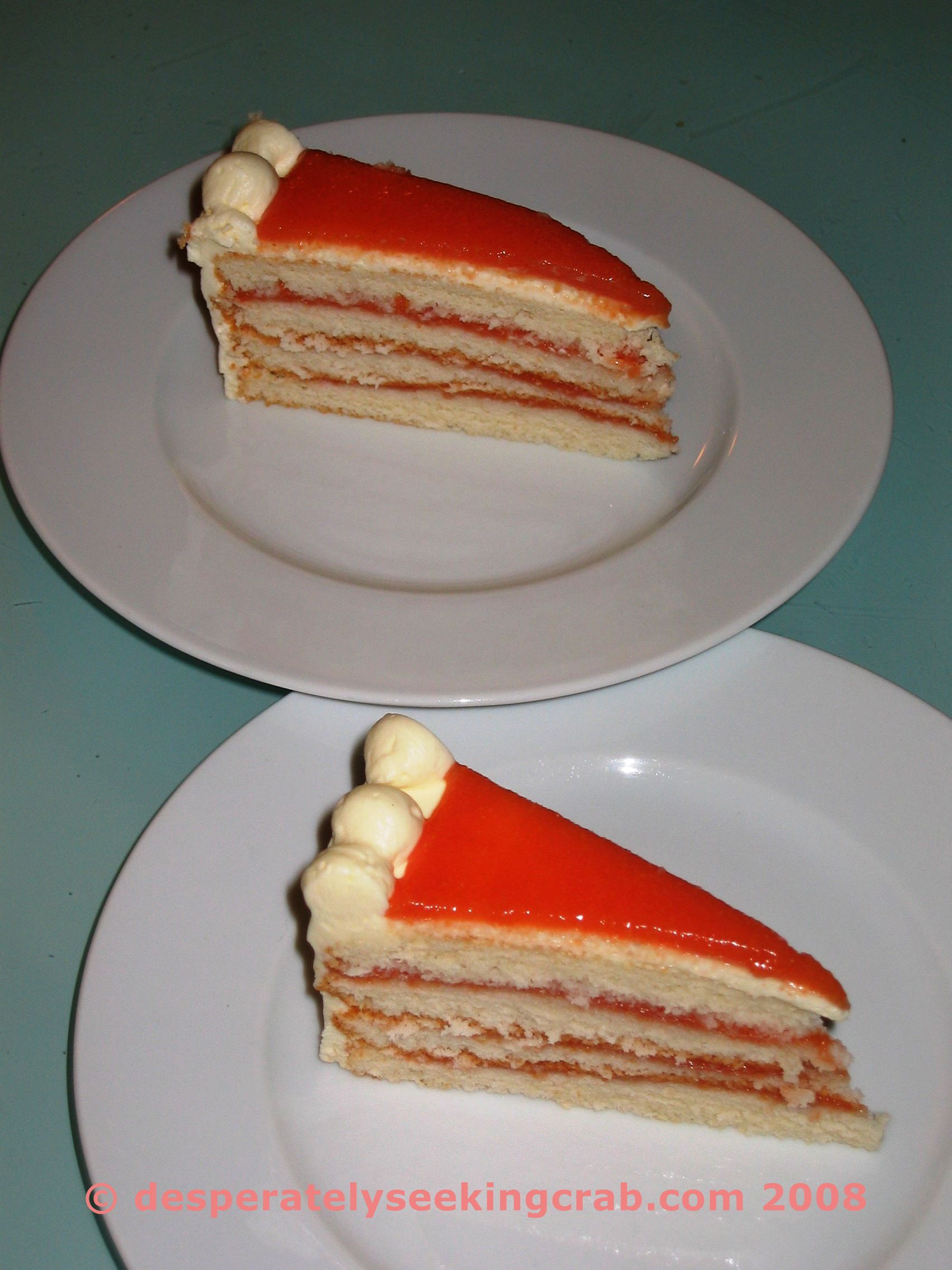
Meanwhile, I’ve added some pictures of the bumper crop of guavas I had last year (since I didn’t have a food blog then). In bakeries throughout Hawaii, a regular feature is guava chiffon cake or liliko’i (passion fruit) chiffon cake. The chiffon cake is very airy and light and the sweet thickened guava puree on top and between the layers tastes amazing. My only complaint about commercial bakeries today is that to cut corners (in cost), so many use that “fake” cream that didn’t even get remotely close to a cow! I think so many people have forgotten what real whipped cream tastes like…and I digress (more on that topic another time). Anyway…I actually replicated the cake at home with REAL cream. The recipe I used was a basic chiffon recipe from The Joy of Cooking and the guava puree was thickened with corn starch (or arrowroot works too) and sugar, cooled and used to fill and top the cake – simple! Fabulous!

Quince Paste Recipe

Quince Paste Recipe:

There are so many variations on this recipe as with anything else. Here is one that I know is foolproof and the pictures show the finished product:

Ripe Quince

Sugar

Water

Lemon Juice (optional but recommended)

Method: Peel and core quince, like you would an apple (some recipes tell you to reserve the skins and core and place into muslin bag while cooking the quince but I don’t find that this is necessary for paste). Cut quince into large chunks and cover with enough water to cook through until soft enough to pierce. Drain water and puree the fruit through a sieve, with a masher or in a food processor.  Weigh the puree and add equal amounts of sugar in weight as the puree in a pan and cook (while stirring constantly) until the mixture starts to get very thick. If you want a thick quince paste that can be sliced, cook until the mixture starts to pull away from the pan. Be careful, when fully boiling, it can be very hot and spurt out and stick to your skin so try to cook it on the lowest heat possible to avoid being scalded.  The best test is, if the paste does not come together again when you create a line through the mixture with a spoon, then it is done.  Pour paste it into a non-stick pan to cool or a pan lined with good parchment paper or even in individual muffin pans.

I have read recipes that say to place into a very low oven for 12 to 24 hours.  We tried the oven and stovetop method and the oven produces a much darker paste.  We opted for putting it on a higher oven setting (about 150C) and stirred it occasionally and it took roughly about 5 to 6 hours and honestly, although I had reservations about doing it this way, I find that it is easier in the oven.

A few tablespoons of lemon juice can be added to brighten the flavour.

Cooking the Quince Paste

The Finished Product

Quince

Have you ever seen Quince blossoms? The beautiful salmon coloured flowers with its cluster of bright yellow stamens can brighten up any wet spring day and make wonderful cut flowers that lasts for a couple of weeks. I can barely resist buying a bunch if I see them at a florist.

The fruit is equally seductive – especially when they start to ripen and the perfume wafts throughout the room its in. The aroma is a cross between pineapple, guava, apple and pear and is an almost candy-like scent, sweet and floral at the same time. I could honestly sniff the fruit for hours as a form of aromatherapy!

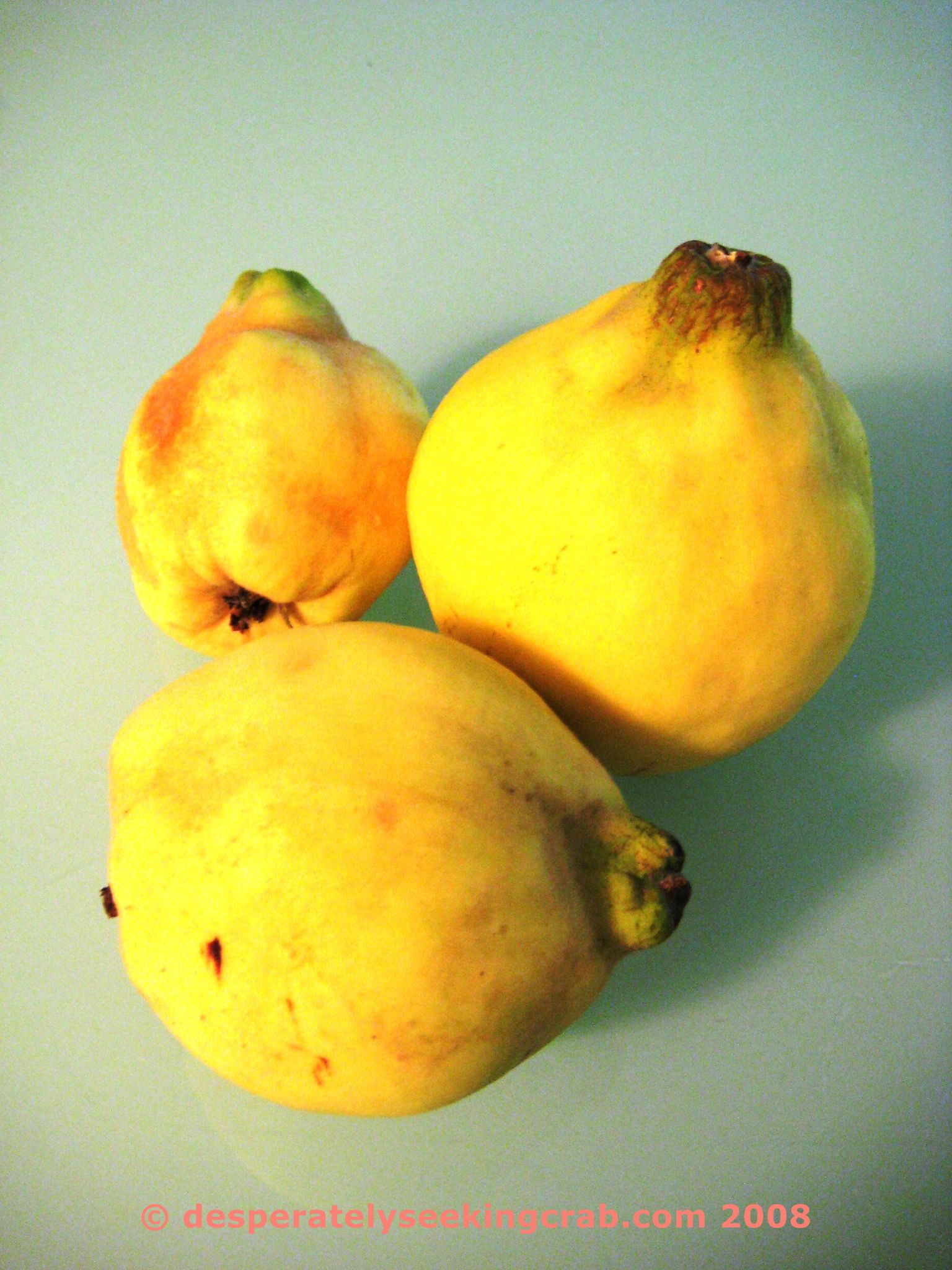
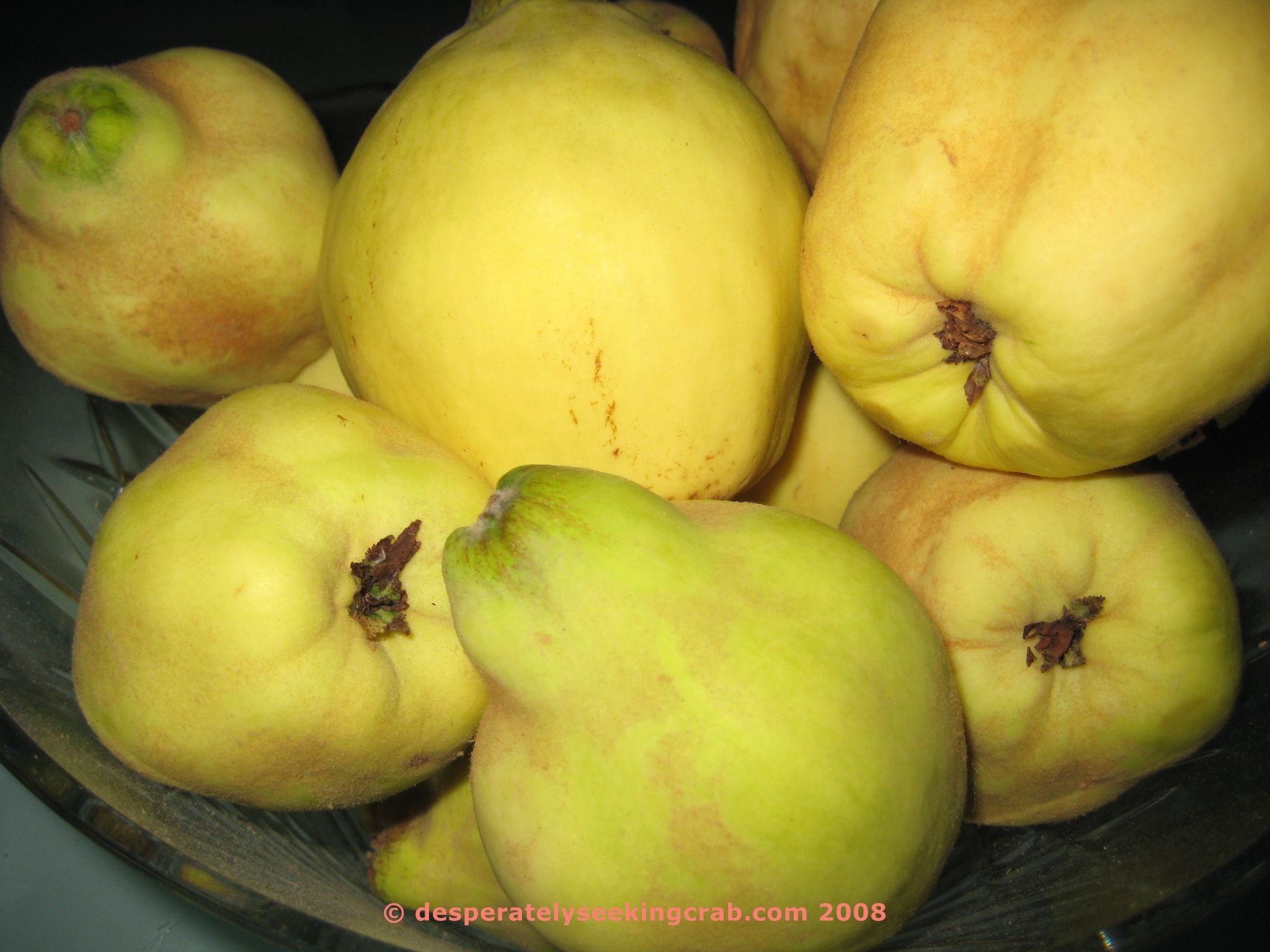
Here in Australia, Barossa food icon Maggie Beer (http://www.maggiebeer.com.au/) is the queen of quince and has definitely brought the fruit back into fashion with her quince paste and a willingness to teach Australians to take advantage of the wonderful fruit that grows practically wild all over temperate areas of Australia. Quince are high in pectin so are great for jelly and fruit cheese. Most commercial varieties are yellow, slightly fuzzy and are too tannic (astringent) to eat raw and must be cooked. What’s amazing is that once cooked, Quince take on the most amazing transformation to a dark rose hue.

Quince picked green and less ripe are good for jelly but if you want to make quince paste or stew them, leave the in the fruit bowl to perfume up the house and ripen – just make sure the skin isn’t starting to wrinkle but if they are, you may still be able to salvage them for pureed quince. When I have an abundance of quince, I always make *quince paste and then with the remainder, I quarter the fruit and cook until tender and preserve them in a light syrup (with vanilla bean) made from the poaching liquid. Poached quince is gorgeous as an accompaniment to roast duck and pork and makes a change from the apples, cherries and plums used to go along with meat. Quince slices can also be added to apple pie and I once made a BBQ sauce for ribs with quince paste and it was lovely (if only I had written down the recipe!)

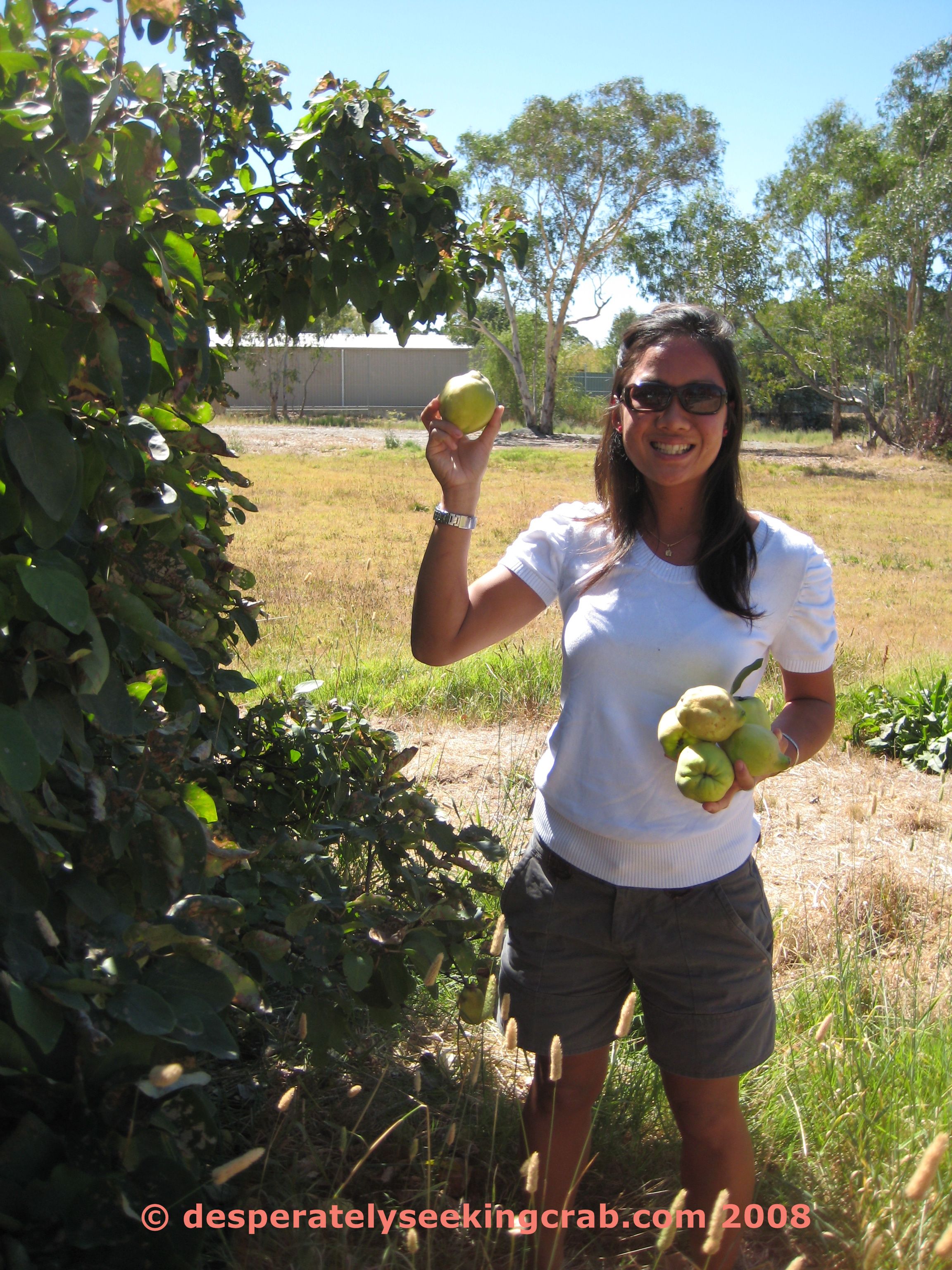
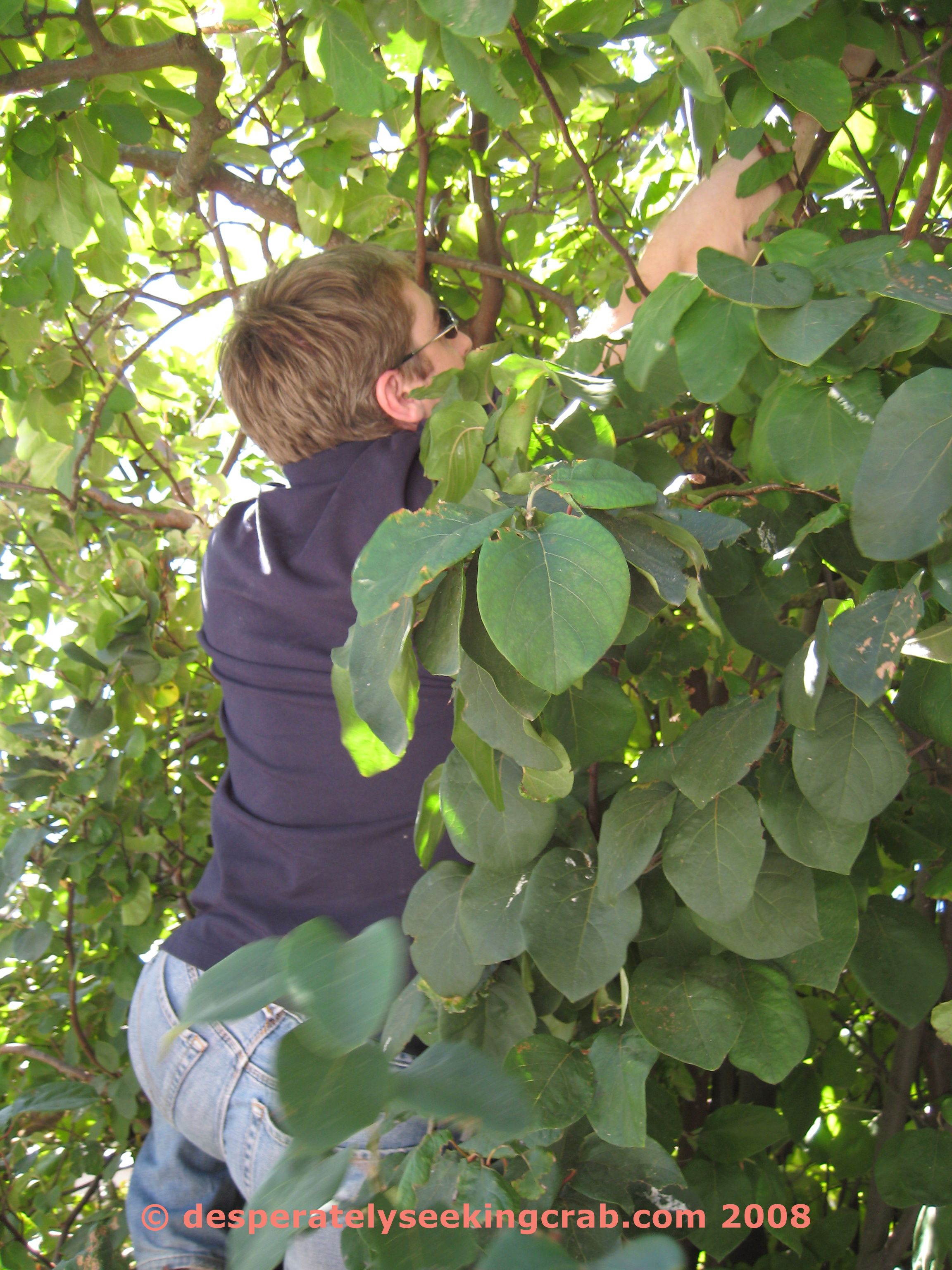
About three weeks ago, my chef friend from Hawaii (who now lives in Australia) came to visit and we took her to the Adelaide Hills wine region famous for their Sauvignon Blancs and also for their abundant produce and quaint little towns. We were on our way to a winery when I spotted at least three large quince trees by the side of the road (next to a huge vacant lot) right off the highway exit! I yelled out to my husband to turn around and go back. He is so used to me finding food growing wild by the side of the road that he doesn’t even question when I tell him to turn the car around. When we pulled up to the trees, the side that was easily accessible by passersby was a bit bare but my friend and husband climbed over the fence to get my loot of quince! I am very clumsy (and decided that it wasn’t worth a trip to hospital) so I stayed over the safe side and held out a bag for collection and took the photos. My friend had never seen quinces growing on a tree before (it doesn’t grow in the tropics) and when she grabbed her first one, she yelled out in surprise, “It’s fuzzy!” I guess since they look like apples, the fuzziness was a bit of a surprise.

*Quince paste is not as common in the USA (yet) but here in South Australia, you will find a small chunk of it on cheese platters and makes a very good accompaniment to many different cheeses. My favourite would probably be goat or blue cheese with quince paste.

Funny Husband

My husband is so funny. I grew up in a household where the huge American fridge and freezer were always full and I think my mother made sure that we had plenty to eat. My husband on the other hand, grew up in the UK where the fridges are not that much bigger than some U.S. college dorm fridges and when he moved out and lived on his own, he kept the bare necessities in his fridge and shopped when he started running out of fresh food. When we got married, our extremely opposite views on food shopping and fridge stocking had to come to a compromise. I tend to buy foods that I feel the mood to eat when I see it and may not necessarily feel like eating it a few days later. My husband on the other hand, has a bit more a routine and eats familiar things and also eats whatever is in the house to reduce waste. He gets annoyed with me when I let things rot because I forgot I bought something and/or because my eyes were bigger than my stomach. Anyway, after living in a better, less-wasteful way, I went home recently and found it uncomfortable to see so much fridge clutter back home and so much going bad and money being dumped in the bin.

We were lucky to come upon an extra free older (piece of s**t) fridge to use to cool the excess that will not fit into our new, pitifully small (UK-style) fridge in our big Australian home. (Personally I don’t understand why the standard fridges in this huge country with big houses are not similar in size to the U.S. fridges…) This fridge is mostly used for our water, drinks and extra food that I’ve preserved or have frozen. On the outside of that fridge, he has started to use a dry erase marker to write a list of what is in there at all times so that I remember them (trust me, I’d really forget).

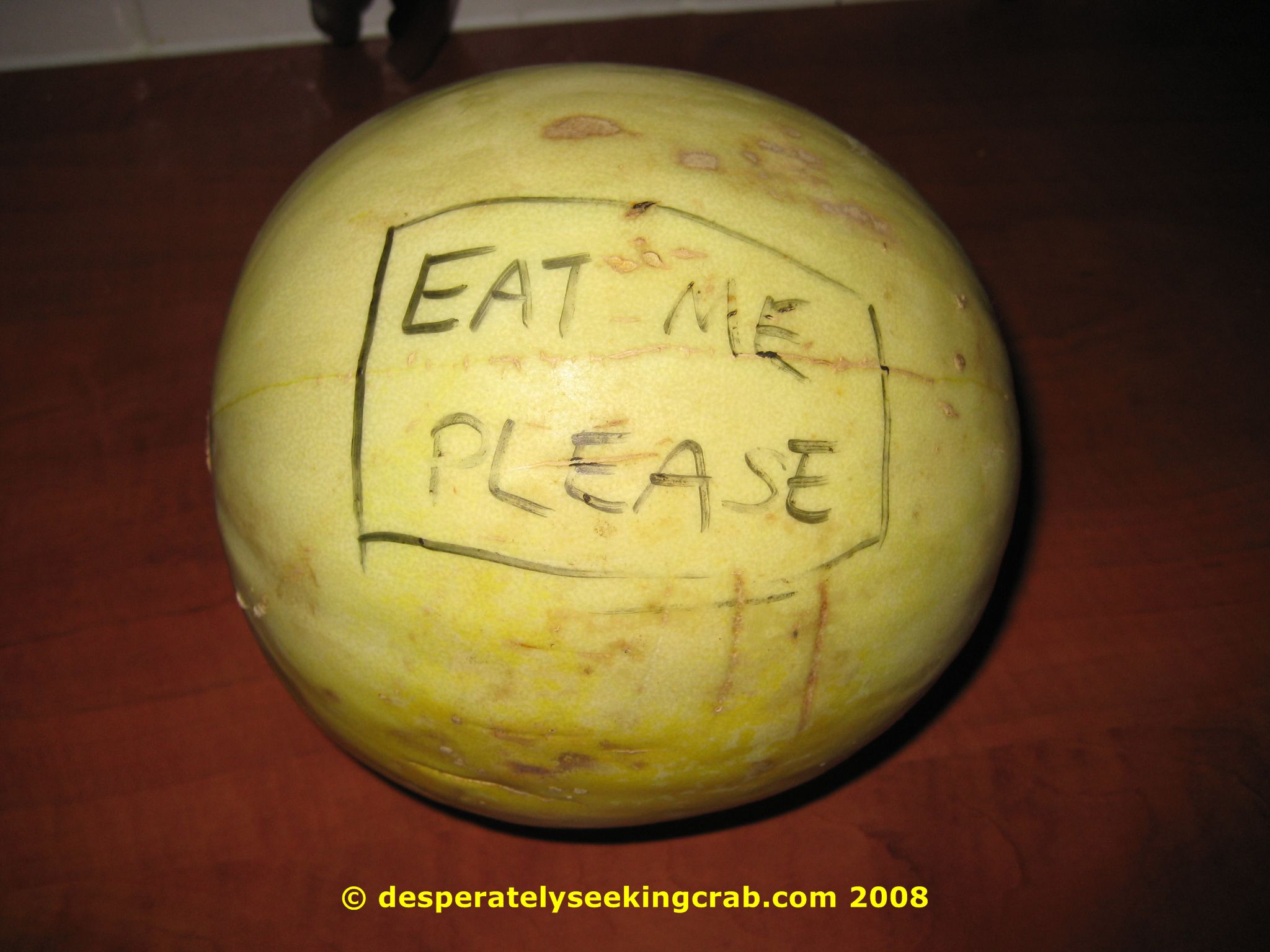
Anyway, to make me remember to eat things or to communicate anything to do with food, my husband either lines up fruit that seems to be getting too ripe, or leaves me messages on the food in the morning before he leaves to work (I wake up a bit later) and then I walk downstairs to see the messages he has left for me.

Here are just a couple of pictures of things he’s left me. I will add to this as I get more photos of my husband’s food communications.

This picture of the milk carton is my husband copying a Sharpie™ commercial on TV. In the commercial, a young guy opens the fridge and sniffs and tastes a carton of milk. He then writes “BAD” on the spoiled milk and places it back into the fridge for his flat mates to discover it instead of dumping it in the sink and throwing it away! So my husband cracked me up one morning by doing the same but trouble was, I DIDN’T SEE IT only noticed the writing when I sniffed it! Good thing I wasn’t going to use more than a tablespoon of it that morning (for my tea).

This was a really fragrant green fleshed honeydew melon but because some melons give me an itchy throat, I was waiting for the right mood to eat it. Why do I buy foods that cause me to suffer? Because, I do. My husband doesn’t really care for melons but was tired of seeing it on the counter for a week so he wrote me a funny message…again, with a Sharpie™.

Design a site like this with WordPress.com
Get started