Feeds:
Posts
Comments

I love olives and as a kid, I loved putting California olives on each finger and eating them off one by one. It would amuse me for minutes!

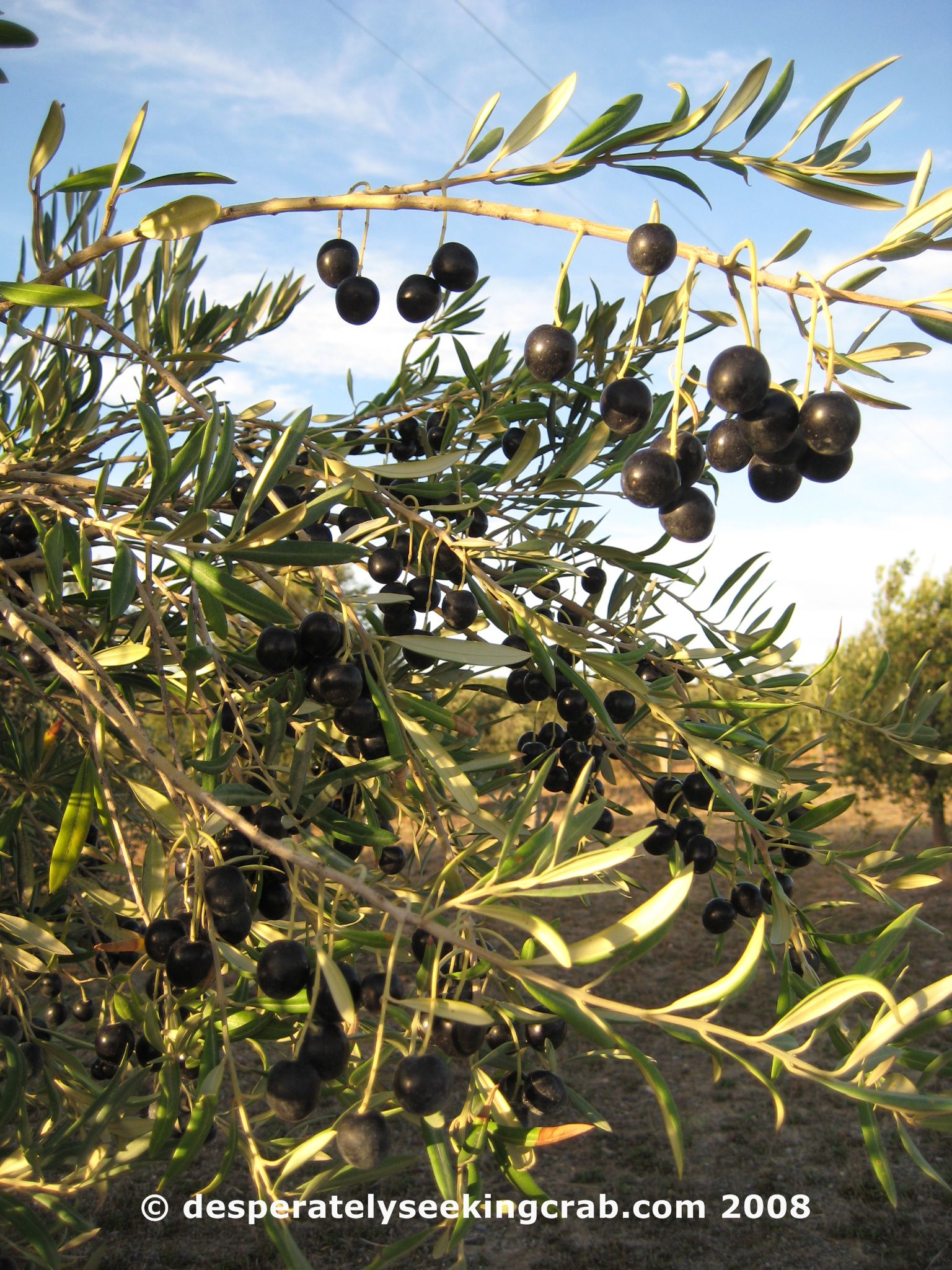
If you’ve ever lived anywhere that has a Mediterranean climate, chances are you’ve seen an olive tree or two. Olive trees can actually grow in tropical climates but they do not fruit (which is why I never saw them until I was an adult). When I worked in the Napa Valley, nearly everyday during olive season, someone from one of my tours would try to pick an olive from the trees along the tour path and eat them raw! And why not?! It’s NOT common knowledge for people who didn’t grow up with olives to know that olives are not edible off the tree. The intense bitterness comes from a chemical compound called oleuropein. As far as most Americans know, those black ripe Mission olives on the trees around the winery looked just like those California black olives that come in a can. (By the way, “California olives” have their own production method to create a uniform product). So olive warnings became part of my repertoire for my tour along with basic viticulture & oenology – it would go something like this: “Now before we go into our cellar, take a look at the gorgeous view of the Oakville valley floor. Also, do you notice the olive trees? Please, please do not eat the olives off the trees as they are very bitter and you will be miserable, I promise.”

Here in South Australia, our climate along the coastline is Mediterranean with hot, dry summers and moderate winters and olive trees absolutely thrive here (sadly it is thriving too well and is a weed that displaces native vegetation in many parts of SA). It is not unusual to be driving down dirt roads in the countryside and see trees in autumn heavy with fruit. One day about a month ago, we were driving back from the beach when I saw olive trees filled with fruit that would have probably gone to waste so I pulled over and we started to get our plastic bags out from the car and started to pick. We ended up picking four different kinds of olives, one variety I know is the tiny Koroneiki olives but the other three are a complete mystery. We thought that one of the dark, ripe black variety might be Kalamata but we were wrong because we later found a real Kalamata tree and saw that the fruit has slightly pointy ends which none of our olives have.

I have cured olives a few times before and each time, I used a different method or recipe. Every other time I did it, I didn’t take it as seriously and thus, they didn’t turn out too well or they moulded very quickly. I decided that this year was going to be different and that I was going to be vigilant about changing the water daily and brining them properly. Although I have a few books that instruct on how to cure olives, I decided to use a method from Vasili’s Garden’s website. Taking care of olives is almost like taking care of a pet! We actually asked our neighbours to babysit our three buckets of olives by changing the water daily when we went away for our anniversary! Although Vasili’s recipe doesn’t mention slitting each olive with a knife, I decided to do it so that the bitterness can leech out faster. Do the slitting in front of a TV and get someone to help you do it because let me tell you, it is a mundane job. Salt curing (dry) is another way to leech the bitterness out of olives – they take on an interesting wrinkly character and have a much more concentrated flavour than the water/brine cured olives.

Cramming as many olives as I can in jars!
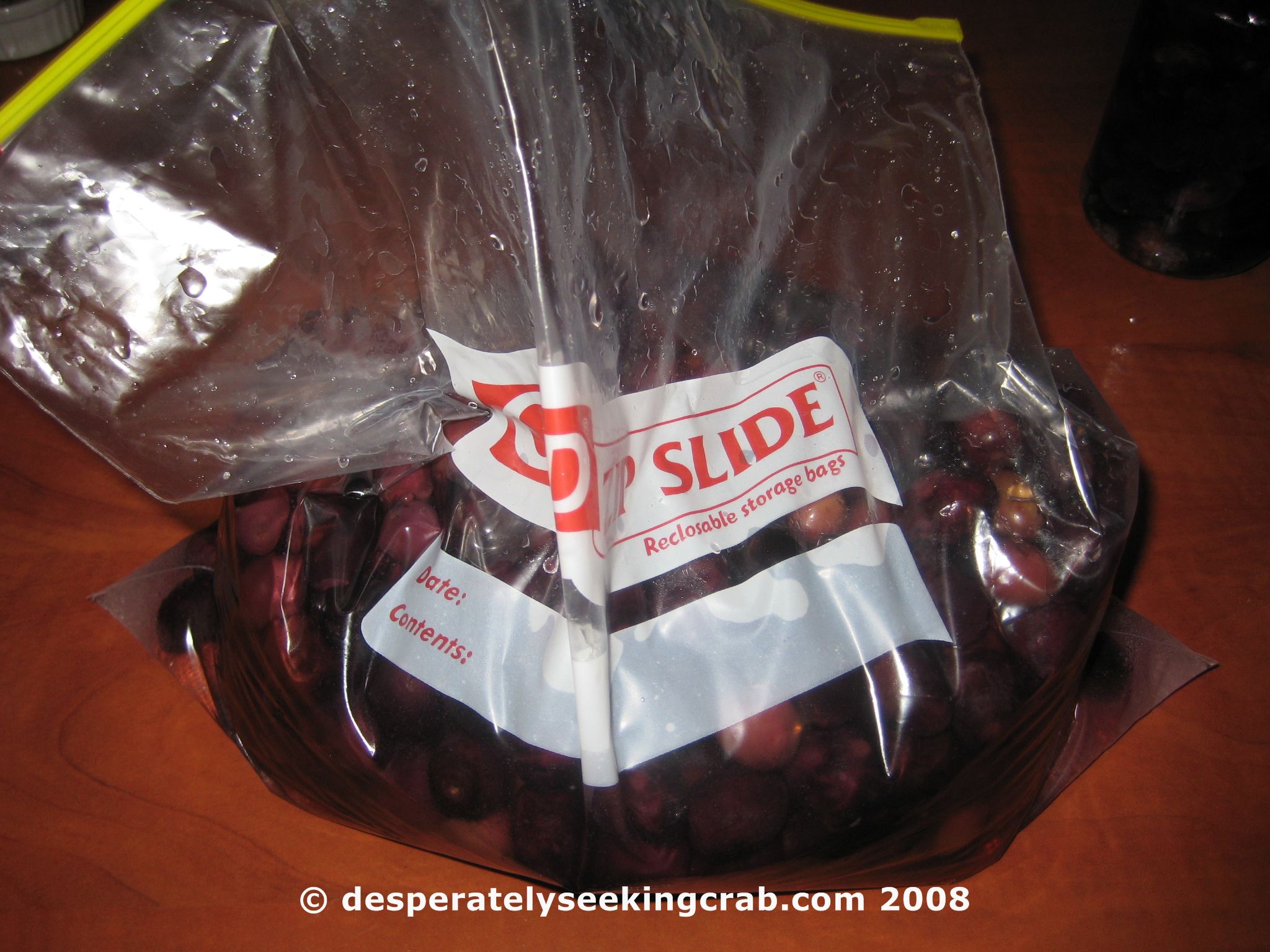
Ran out of jars, I guess I’ll try plastic!

Currently, the olives are in jars (and one large Ziplock bag because I ran out of jars) and sitting in our second (drinks) fridge and I’ll be checking on them once a week to see if the bitterness is gone yet. Once they are ready, I think I will experiment and flavour some of them with thyme, rosemary, garlic, chillies or preserved lemons…whatever I fancy that day.

Do you cure olives? What do you flavour them with?

Homemade Granola

While I compile stories to write from my trip back home to Hawaii, I wanted to share my granola breakfast cereal that I make for my husband (aka crab accomplice) since it’s been a little while since my last post. As some of you may remember in the previous post “Funny Husband”, me and my husband were brought up very differently and what we eat for breakfast is definitely one of our differences. I like cereal as a snack (either w/milk or dry) but my husband eats cereal just about every morning. Buying a lot of cereal can get expensive if it’s not on sale – Hawaii in particular has some of the highest cereal prices in the US. In Australia, with the drought affecting so many farmers and the rise in petrol prices, food costs are also on the rise. Price is not the only reason why I decided to create this cereal – the main reason is so that I know what ingredients go into making it and that I can control the quality of the ingredients and alter the contents on a whim without buying numerous boxes. I honestly feel that the extra stuff I put into my granola makes it much more nutritious than the pre-made store-bought kind.

Homemade Granola

Recipe:

2 c. Rolled Oats

2 c. Rice Puffs (or Buckwheat, Millet, or any other puffed grain)

1 c. Amaranth (optional)

1/2 c. Wheat bran

1/2 c. LSA** (Linseed, Sunflower & Almond mixture)

1/2 c. Sunflower seeds

1/2 c. Pumpkin seeds (pepitas)

1/2 to 1 c. Whole almonds (with skin on)

1/2 to 1 c. Walnut halves (broken into smaller pieces)

1/4 to 1/3 c. Macadamia nut oil

1/4 to 1/3 c. Tahini

1/4 to 1/2 c. Honey

Dried fruit of choice – I use raisins, cranberries, blueberries, apricots, dates and shredded coconut.

Corn or Wheat Flakes (optional)

**You may just leave this raw and eat it like traditional European Müesli (omitting the oil, honey and tahini) but if you want it like crunchy granola, follow the directions below.

Preheat oven to 325F / 160C. Combine all dried ingredients EXCEPT the fruit and mix through. Pour the oil, tahini and honey evenly over the dry mixture and use your hands (get dirty!) to evenly distribute and coat the sticky liquid throughout the dry ingredients. It is important that there are no lumps of honey or tahini left or else it may burn in the oven quite easily. Spread the mixture on two baking sheets and place in the oven. After about 10 minutes, take the trays out and stir the granola so that the browned edges get mixed into the middle to even out the browning. When putting trays back into the oven, rotate what rack you return the trays back onto (so if one was on the top rack, return it onto the bottom rack for the next 10 min). It takes about 20 minutes or so for the granola to become golden brown. Make sure you do not stray too far from it because it can burn quite easily (sort of like caramel does). Once golden brown, remove from oven to cool. Once cooled, add your dried fruit and/or coconut and corn or wheat flakes for added texture. Place in sealed plastic containers.

**LSA – It’s a mixture that is used commonly in Australia that consists of linseed (flaxseed), sunflower seeds and almonds ground together. The usual way to make LSA is with a 3/2/1 formula – 3 parts linseed, 2 parts sunflower and 1 part almond. For example, approximately 100 g. linseed, 70 g. sunflower, 35 g. almond. Put mixture through a food processor until ground finely. Linseed is a good source of omega-3 fatty acids and cannot be absorbed by your body unless it is ground up. If eaten whole, the outer husk is so thick that it will simple just pass through you.

I like using organic oats and tahini and whatever else I can find that is organic but that is entirely up to your budget or availability. If you don’t like tahini, use peanut, cashew or almond butters. Macadamia nut oil is my favourite for flavour and because it is good for you but you are welcome to try hazelnut, walnut, plain canola, or other oils that will impart a mild or nutty flavour. Amaranth may be hard to get for some but I like to add it for extra protein. You may substitute brown sugar for honey but I think honey gives it an extra complexity (try to buy local honey if possible). Try to experiment with different flavours and nuts and fruits. You can even split the granola batch in half and add different fruits to each half at the end to suit different people in the family.

P.S. I actually ended up burning my batch of granola as I was writing this.  My kitchen is pretty far from my office so I couldn’t smell it!  I have made this a million times but because I wasn’t paying full attention to what I was doing, it burned!

Hawaiian Break

I have to apologize for my lack of postings but I have been away for over a week and I actually do not have easy access to the internet without paying a fortune for regular access so I’m finding it hard to stay on a computer long enough to type anything meaningful. I have eaten plenty of comfort food during my trip home but I am sad that it is not quite mango season yet although trees growing all over the islands are sooo heavy with green mangoes. So close yet so far. Here are just a few photos of my recent wanderings:

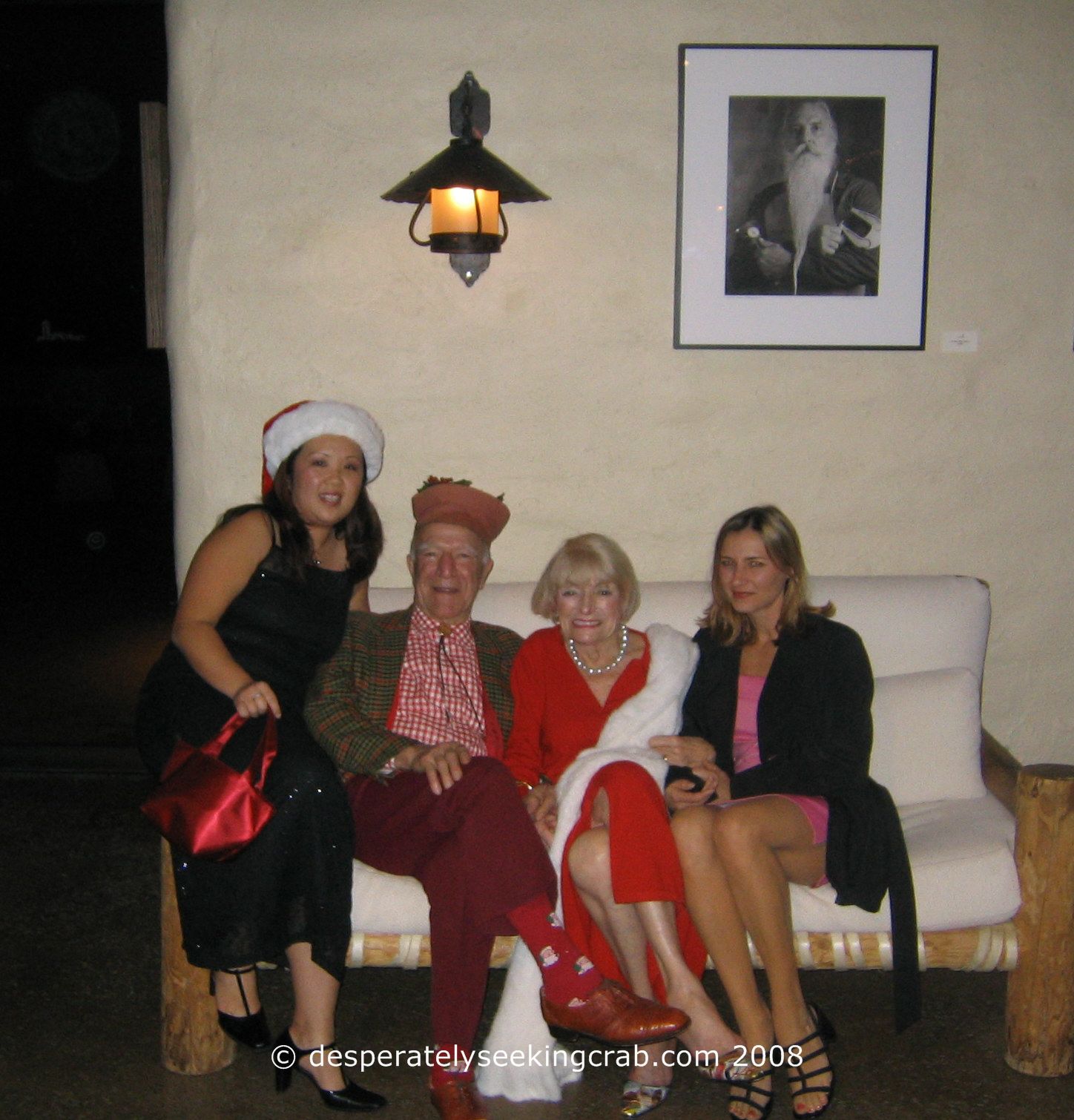
Robert, Margrit & Tim Mondavi with Employees (me holding the teddy bear), October 2004

Cliff May Designed this Mission Style Winery

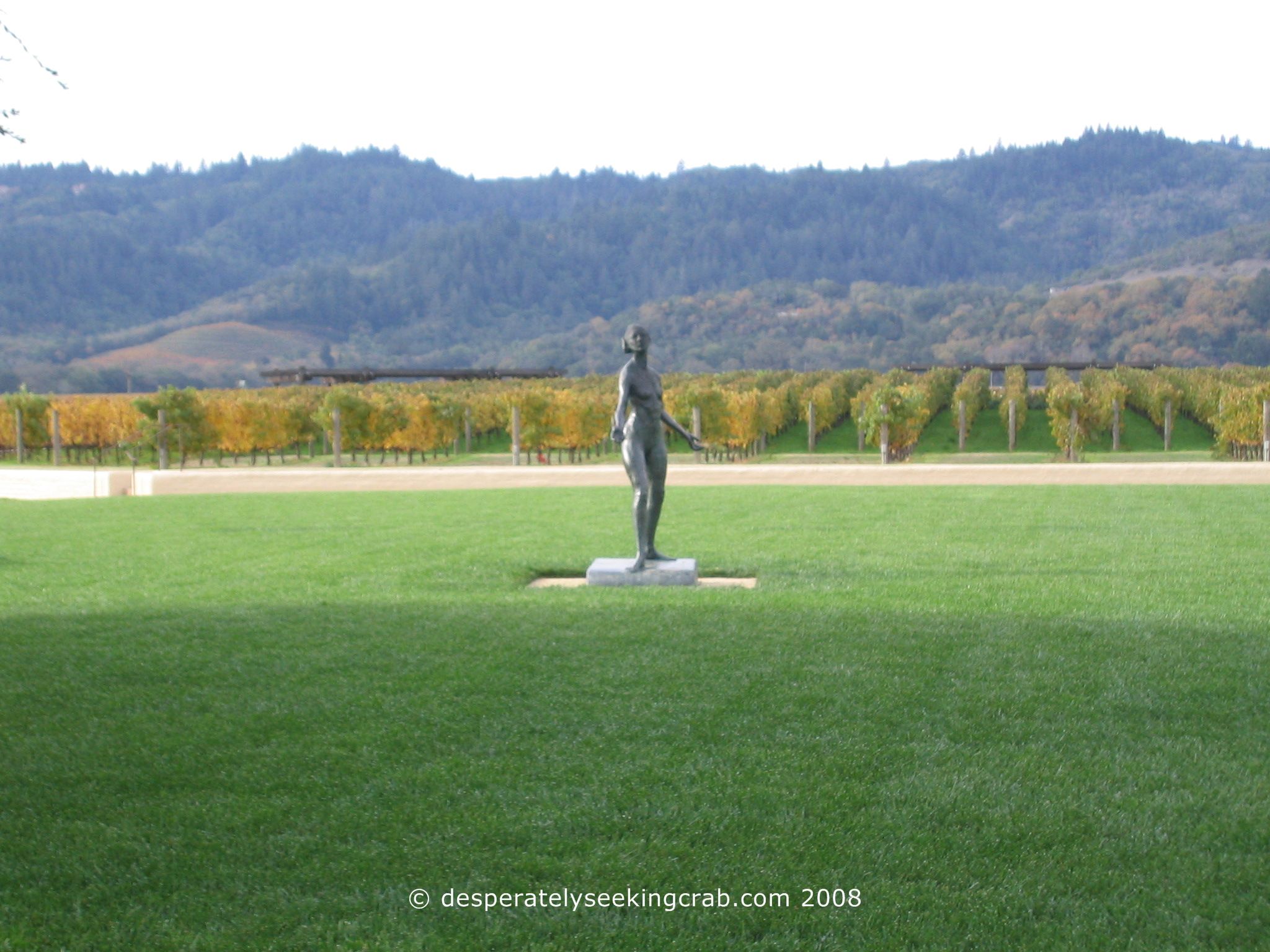
Robert Mondavi Winery in Autumn

Christmas Party 2004

From the Napa Valley Vintners website:

On May 16, we lost an extraordinary leader in the world of wine, legendary American vintner Robert Mondavi.

One of the many important lessons Mr. Mondavi taught us was to always be there to help a neighbor, a friend, our community or beyond. He was one of the most kind and generous people we’ve ever known. One of the original founders of both the Napa Valley Vintners non-profit trade organization in 1944 and its community fundraiser, Auction Napa Valley, in 1981, Mr. Mondavi set the standard by which all Napa Valley vintners strive to operate: making wines that are among the best in the world and using their resultant status to raise money to support charitable causes.

We are all beneficiaries of Robert Mondavi’s vision, his generosity, his warmth of spirit and his joy for life, and in tribute, we invite wine lovers from anywhere in the world to share a remembrance of the man and his accomplishments as a vintner, a Napa Valley ambassador, a supporter of his community, a patron of the arts and a friend to many.

Before I left the house to catch a flight Saturday morning (Australian time), I saw a headline from Wine Spectator online that Robert Mondavi had passed away. Although it is true what James Laube said, that “we knew this was coming” (due to his ailing health), it was still very sad news for me (and countless others) to read that he had died. He was 94 years old, just a month shy of his 95th birthday. Like many people who have left comments on the various news and wine industry websites online, I have a lot nice things to say about the man that I didn’t really know very well but who influenced me greatly in my career and how I look at work.

I first met him at the Commonwealth Club in San Francisco for the signing of his autobiographical book, “Harvests of Joy” in 1998. He spoke of his life and experiences and I remember being impacted by his passion and his belief that anything can be accomplished with hard work and conviction. Years later, I was a student at UC Davis where I took an Introduction to Winemaking class. It was then (particularly during the history of California wine) that I realized just how important and instrumental Mr. Mondavi was putting the Napa Valley on the map. As it happened, the Robert Mondavi Winery was hiring summer wine educators and I immediately jumped at the chance. The day I got the job was one of the best days of my life and I never took the job for granted for the nearly three years that I worked there. I even drove three to four hours a day from my Sacramento home to work in Oakville.

Margrit and Bob Mondavi was not only generous through their philanthropy (Copia, UC Davis & Oxbow School) but also opening their home to Visitor Center employees with both an Easter and Christmas lunch. They allowed us to walk around in their home as if we were all one huge family. He would always kiss ladies on both cheeks whenever we said hello and preferred us to call him Bob. I will never forget how I broke down in tears as I started my very last tour under that famous arch knowing how much I would miss the place.

I have been thinking about what to say in this blog for days and I do not have enough words to express everything that I feel. Working for the Robert Mondavi Winery was an experience that I now use as the benchmark for job excellence. In my experience, it was the only place of employment where everyone truly respected and was in awe of the founder. He was a tireless and passionate crusader of California wine with an amazingly huge heart and I and countless other former colleagues who have written tributes, are so blessed to have been part of sharing his passion. My sincere condolences go to his family.

Even before I wrote a paper on eggs, I have always adored eggs. Eggs are truly the ultimate fast food complete with its own packaging. A single boiled egg is “cheap as chips” and has been a savior for me many times when I was running a little late to work and didn’t have time for breakfast – a dash of salt & pepper and a cup of coffee gave me instant low-GI protein and prevented me from passing out until lunch.

My lovely neighbor Sue worked with someone who owned several hundred chickens (we call them chooks in Australia) and sold them for a mere $3.00/dozen for free range eggs which is an absolute bargain considering some of the free-range eggs are up to $6.50/dozen. They were delivered to me fort-nightly and I really enjoyed knowing who my supplier was. Sadly those egg supplies have stopped as the woman sold her entire flock to someone else. 😦

Eggs for me are definitely an item that I do not skimp on. I will pay the extra money to buy the best eggs available in the market. Recently I watched a food program that featured a chicken farmer explaining the difference between caged eggs versus free range and he said that if you were blind-folded, you wouldn’t be able to tell the difference and that the reason why you pay more for free range is for animal welfare. I am not sure that I believe that fully because eggs taste different depending on the feed that they are given and surely their high stress level can’t be good for the eggs they produce. Regardless, I feel happier knowing that the chooks that laid my eggs were not stressed out in a battery hen factory.

Here in SA, we have a few suppliers of free-range eggs and Fryar’s Kangaroo Island Free Range Eggs on Kangaroo Island and Rosie’s Free Range Eggs from Eudunda in the Barossa Valley (the most famous wine growing region in Australia) are a couple of producers that I purchase and we are lucky to have such a wealth of produce here. I love opening a carton of eggs and occasionally finding a small feather or even chicken poo on the egg – I don’t know, it makes it much more authentic to me. In the states, unless close to farms, so many commercially produced food products are so sterile that chicken poo or feathers would probably be totally frowned upon!

It is interesting that nearly all eggs produced here are brown in color and nearly all eggs in the USA are white. Brown eggs are more pricey in the states and often sold as fertile but the main difference in color just has to do with the variety of chickens that lays the eggs. I guess that’s another “cultural” difference that I have noticed.

My first experience of the natural “Easter” colored eggs was at Chez Panisse where I saw a large bowl full of these pastel blue, green and pink eggs. I couldn’t take my eyes off of them because I couldn’t believe that they were natural and they were so exotic to me. Since then, I have tried to learn as much as I can about chicken breeds and egg varieties (but by no means am I an expert). One of the chicken breeds that lays blue eggs is called the Araucana and can trace its bloodline from two rare South American breeds – Collonca and Quetero.

If you ever have a chance to go to England, head to either Sainsbury, ASDA or Waitrose grocery stores and look for Clarence Court Free Range Eggs that specialize in rare breeds. Their “Old Cotswold Legbar” lays eggs in a variety of beautiful pastel colors including, turquoise, blue, olive, pink, peach and eau-de-nil. They are producing doing duck, goose, pheasant, quail and Ostrich eggs as well! Just beware, if you purchase an ostrich egg, it is equivalent to 24 chicken eggs!

Eggs may seem like plain old breakfast food for some but it is pretty divine to have a truffle-scented omelet with a salad and a glass of champagne or a rich crème caramel!

Ostrich & Emu eggs for sale in Barcelona

Design a site like this with WordPress.com
Get started